There is a specific kind of magic to walking up to your front door with two bags of groceries in one hand, a phone in the other, and having the door simply unlock itself. Not after you tap. Not after you fumble for a fingerprint. Just — open.
That trick finally became real in 2026, and it has a name: ultra-wideband unlocking, riding on top of a new industry standard called Aliro. If you have been following smart locks in Singapore, you have probably seen the marketing already. The Aqara U400 landed here earlier this year. Schlage shipped its Sense Pro in June. Samsung put digital home keys into Samsung Wallet in March.
Here is the part nobody in the marketing copy will tell you: for a very large number of Singapore homes — specifically, most HDB main doors — none of these locks will fit. Not “will need an adapter.” Will not fit.
Let me explain what Aliro actually is, what genuinely works today, and why the answer for your flat probably depends on which door you are standing in front of.
What Aliro Is, and Why It Isn’t Matter
Aliro is a standard from the Connectivity Standards Alliance — the same body that runs Matter and Zigbee. Version 1.0 was published on 26 February 2026. It is worth being precise about what it does, because it is routinely confused with Matter.
Matter tells your lock how to talk to your smart home: lock, unlock, report battery, appear in Apple Home or SmartThings. Aliro is about a completely different problem — how your phone proves to the lock that it is allowed in. It standardises the credential itself, across NFC, Bluetooth LE and ultra-wideband, so that a digital key can live in your phone’s wallet rather than in yet another manufacturer’s app.
That distinction matters. Before Aliro, “phone as key” meant Apple Home Key, which meant Apple’s ecosystem, on Apple’s terms, with lock makers negotiating individually. Aliro makes the credential portable in principle. Apple, Google, Allegion, Aqara, HID, Kwikset, Nordic Semiconductor, Nuki, NXP, Qorvo, Samsung and STMicroelectronics are among the first companies lined up for certification — which is an unusually broad tent, and the reason this one is worth paying attention to rather than filing under “another standard nobody adopts.”
The ultra-wideband part is what produces the party trick. UWB gives centimetre-level ranging plus direction, so the lock knows not merely that your phone is nearby but that you are approaching from outside and walking toward the door. That directionality is the whole ballgame. Bluetooth proximity unlocking has existed for years and everyone hated it, because Bluetooth cannot tell the difference between you arriving home and you sitting on your sofa two metres away on the wrong side of the door. UWB can.
It also closes a real security hole. Relay attacks — where an attacker captures and rebroadcasts your key’s signal from a distance — are much harder against a radio that measures time-of-flight to the centimetre.
The Locks That Actually Ship Today
Three UWB locks matter right now. All three are worth knowing about, and all three share a problem we will get to.
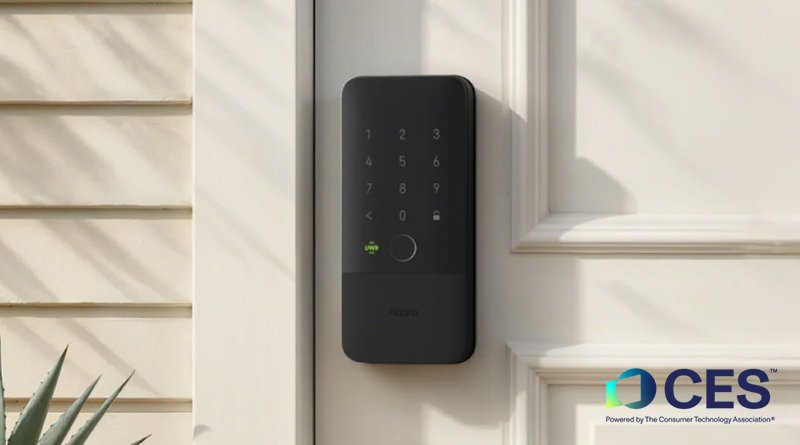
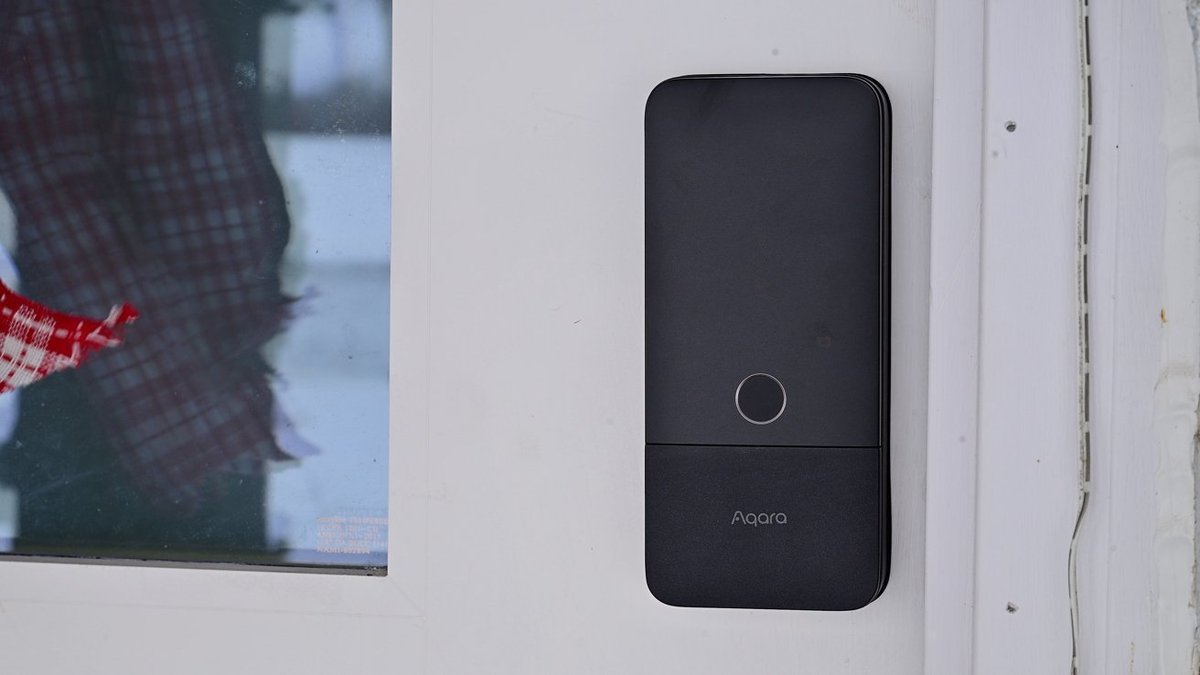
Aqara Smart Lock U400 — announced at CES 2026 in January, US$269.99, and notably already available in Singapore. It is Matter over Thread, does UWB hands-free unlock with Apple Home Key, holds up to 50 fingerprints, runs on a 4,880mAh rechargeable pack Aqara rates at up to six months per charge, and carries an IP65 exterior rating. Aqara describes it as Aliro-enabled, with cross-ecosystem UWB coming as the standard rolls out rather than working universally on day one. Locally, HomeSmart Singapore lists the U400 bundled with an Aqara Hub M100 starting around S$460 depending on configuration.
Schlage Sense Pro — US$399, shipped 29 June 2026. Schlage’s first Matter-over-Thread lock and its first UWB one, using what the company brands Converge technology. It reads your speed and direction of travel to work out whether you actually intend to come in, and Schlage says it is built to the Aliro standard with Samsung Wallet and Google Wallet keys expected later in 2026. It is a US and Canada launch; there is no Singapore retail channel.
Ultraloq Bolt Mission UWB — US$299 from Xthings, which has confirmed Aliro support once certification lands. Again, no local channel.
So in practice, if you are in Singapore and want UWB today, the Aqara U400 is the realistic option. That is not a knock on the others — it is just distribution reality, and buying a US-market lock with no local installer or warranty for a door you rely on every single day is a bad trade.
The Singapore Catch: They Are All Deadbolts
Here is the thing that gets glossed over in every international review.
The U400, the Sense Pro and the Bolt Mission are all single-cylinder deadbolts. That is the standard American residential door format: a timber door with a single bore hole, a deadbolt above a separate knob or lever. The U400 replaces that entire deadbolt assembly, inside and out — a more involved job than the retrofit locks that simply cover your existing thumb-turn, but still fundamentally a swap into prep that already exists.
Singapore doors do not work that way. Your HDB main door is almost certainly a fire-rated timber door fitted with a mortise lock — a lock body that sits inside a deep rectangular pocket routed into the edge of the door, driving a latch and a deadbolt from one integrated unit. The overwhelming majority of digital locks sold here are mortise-format push-pull or lever locks precisely because that is what the door cavity expects. Then there is the metal gate, which uses its own HDB gate lock box entirely.
You cannot casually retrofit a US deadbolt onto a mortise-prepped fire-rated HDB door. It requires new boring, new prep, and — this is the important bit — it puts you straight into regulatory territory.
Since 2024, digital locks installed on fire-rated doors in Singapore must themselves be fire-rated and carry a valid Certificate of Conformity to SS 332 or EN 1634-1. HDB main doors are typically FD30 (30-minute) rated, with FD60 required for some units near lift lobbies and fire escapes. The CoC is required at renovation permit submission, the lock must retain a mechanical key override, and the installation has to preserve the door’s fire integrity — which means keeping intumescent strips and smoke seals intact and not drilling the door into swiss cheese.
The practical consequence: cutting a fresh deadbolt bore into a fire-rated door to fit an imported US lock can invalidate that door’s fire rating. If a fire occurs and an investigator finds an uncertified lock compromised the door, your insurance claim is exposed. This is not theoretical paperwork — it is the reason competent local installers will turn the job down.
If you are still working out the lock landscape here generally, our digital lock vs smart lock breakdown for Singapore HDBs covers the format question in more depth, and HomeSmart’s guide on how to choose a digital smart door lock in Singapore is a good sanity check before you commit.
Where a UWB deadbolt does make sense here
It is not a universal no. UWB deadbolts are a genuinely good fit for:
- Landed homes with side doors, back doors, gates or utility doors that are not fire-rated and are already bored for a deadbolt.
- Condos where the unit door is not fire-rated, or where the management already permits deadbolt-format hardware. Check with your MCST before buying, not after.
- Home offices, study doors, store rooms and internal doors — no fire rating, no drama, and honestly a lovely place to trial the technology before betting your main door on it.
- New builds and renovations where you are specifying the door anyway and can order it prepped correctly with matching certification.
That last one is worth flagging if you are mid-renovation. Door prep is one of those decisions that is trivial before the door is hung and expensive afterwards — the same logic behind our smart home wiring checklist for BTO and HDB renovations.
What You Actually Need on the Apple Side
If you do buy in, hands-free UWB unlocking has real prerequisites, and missing any one of them means you paid for a feature you cannot use.
For the Aqara U400, Aqara specifies:
- iPhone 11 or later, running iOS 18.5 or newer — but excluding the iPhone SE and iPhone 16e, neither of which has UWB hardware.
- Or Apple Watch Series 6 or later (again, not the SE) on watchOS 11.5 or newer.
- A Thread-enabled Apple home hub — a HomePod mini, HomePod (2nd generation), or Apple TV 4K.
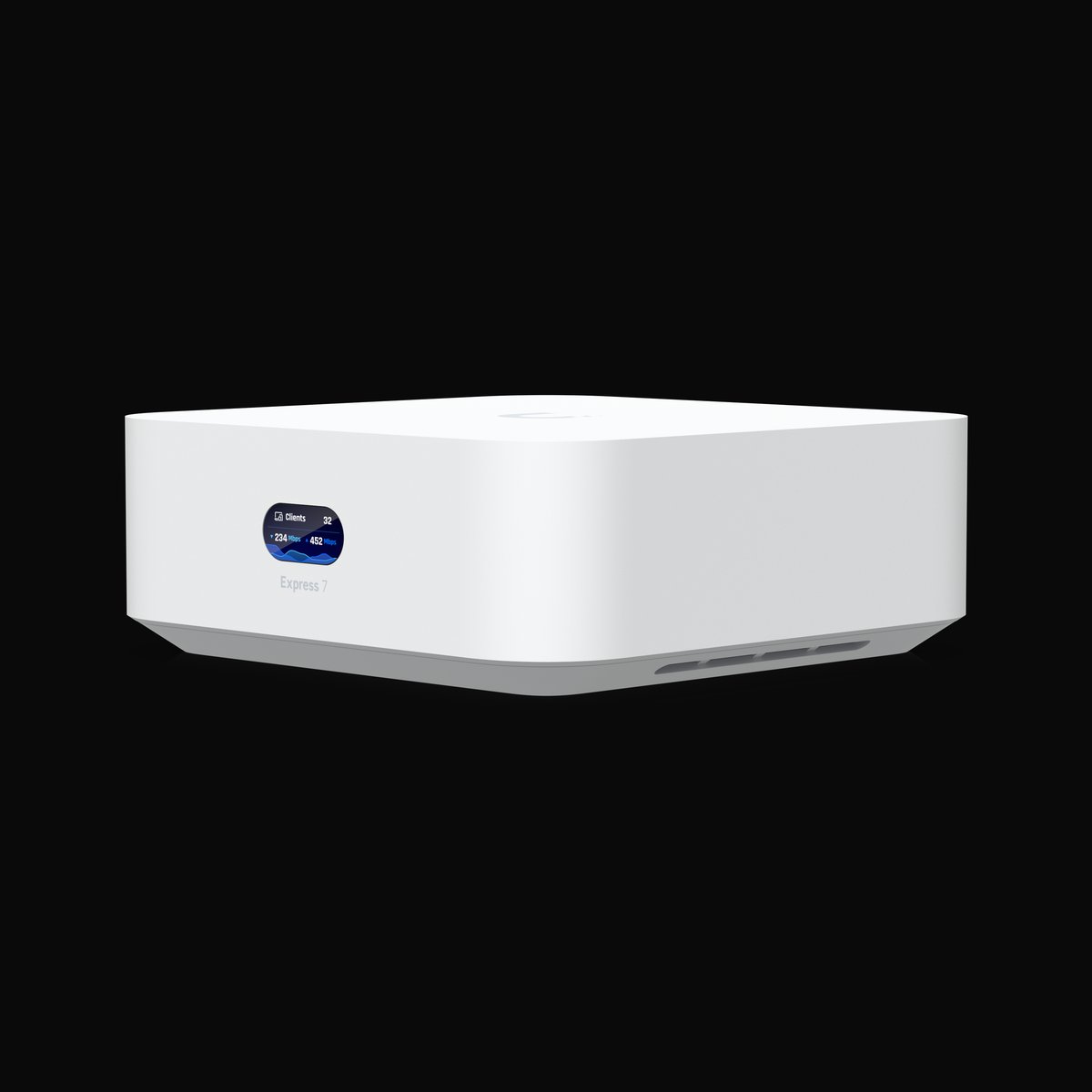
The hub requirement catches people out constantly. Without a Thread border router in the flat, the lock has no path into Apple Home and no remote access, and you are back to fingerprints and PINs. If you do not already have one, budget for it as part of the purchase rather than discovering it at 11pm on installation day. HomeSmart’s Apple Home setup guide walks through what a working hub arrangement looks like.
One more thing worth internalising: Thread is a mesh, and HDB and condo walls are reinforced concrete that Thread does not love. A single hub at the far end of a four-room flat is a marginal deployment. Our piece on building a bulletproof Matter mesh through HDB concrete applies directly here — a lock that intermittently drops off the network is worse than a dumb lock, because you stop trusting it.
Android Is Finally Invited
For years, “phone as key” effectively meant “iPhone as key.” That changed in March 2026, when Samsung announced Digital Home Key support in Samsung Wallet built on Aliro at Mobile World Congress. Galaxy owners can tap with NFC, or — where the lock supports it — approach with UWB and have it open. Credentials are protected by Knox, and Samsung named Aqara, Nuki, Schlage and Ultraloq as launch-partner lock brands.
Google Wallet support is expected to follow later in 2026; Schlage has explicitly said it anticipates both Samsung and Google Wallet keys on the Sense Pro once Aliro certification completes.
Two caveats before you get excited. First, Samsung began rolling this out in select markets without publishing a full country list, so confirm Digital Home Key is actually live on your own Galaxy before buying a lock specifically for it. Second, “Aliro-ready” is doing quiet work in a lot of product copy right now. A lock shipping today with Apple Home Key and an Aliro-capable radio is not the same thing as a lock that is Aliro-certified and working with your specific phone’s wallet. That gap will close over 2026. It has not closed yet.
So Should You Buy One?
My honest read, as of August 2026:
If your main door is a fire-rated HDB door: wait. Not because the technology is bad — it is genuinely excellent, and hands-free unlock is the first smart lock feature in years that changes daily life rather than just adding an app. Wait because the form factor is wrong for your door and the fire-rating rules are not negotiable. What you want is a mortise-format, CoC-certified, locally-supported lock with UWB inside. Aqara, Kaadas, Philips and the other brands that actually sell into this market know exactly how big the Singapore and wider Asian mortise market is. That product is coming. It is not here in August 2026.
If you have a non-fire-rated door already prepped for a deadbolt — a landed side door, a compliant condo door, an internal door — the Aqara U400 is the sensible buy, purely because it is the one with local availability and support. Confirm the door thickness and prep before ordering, and confirm with your MCST if you are in a condo.
If you are renovating right now, this is your moment to think about it, because door specification is the cheapest it will ever be at exactly this stage.
And if you already own a perfectly good digital lock, there is no upgrade case here. Hands-free unlock is delightful. It is not S$500-plus-installation delightful when your existing fingerprint reader opens the door in under a second anyway.
The Bottom Line
Aliro is the most consequential smart home standard to land since Matter itself, and unlike some standards, it has Apple, Google and Samsung all actually shipping against it in the same calendar year. The technology works. The security model is better than what it replaces. Ultra-wideband unlocking is the rare smart home feature that people notice and love immediately.
The gap in Singapore is not the standard. It is the hardware form factor — an American deadbolt convention colliding with an Asian mortise-and-fire-rated-door reality, plus a regulatory regime that quite reasonably does not care how nice your unlock animation is.
Give it a year. The standard is settled, the silicon is cheap, and the manufacturers who sell most heavily into this region build mortise locks by default. The version of this article written in 2027 will have a much shorter list of caveats.