Aqara turned up at IFA 2026 — running in Berlin as you read this, 4 to 8 September — with five new lights. Buried in the spec sheet is a single line that matters far more than the lumen counts: every one of them runs both Thread and Zigbee.
That sounds like the end of an argument. It isn’t. It’s the beginning of one — because on Aqara hardware, dual-protocol has never meant “both at once.” It means you pick one at setup time, and changing your mind later involves a factory reset and a re-pair.
If you’re gluing an LED strip into a ceiling cove or twisting a downlight into a false ceiling in a Singapore flat, “decide before you install” is not a small footnote. Let’s go through what Aqara actually launched, what the two protocols really buy you in an HDB, and how to make the call once instead of twice.
What Aqara actually announced
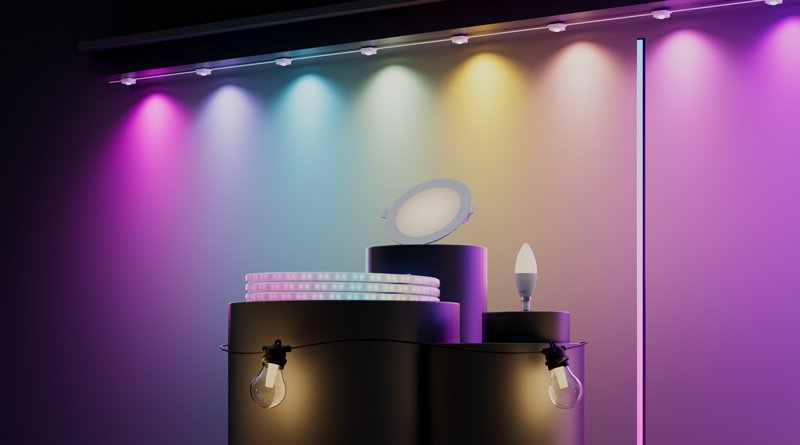
Five products, all Matter-enabled, all carrying both radios (Aqara’s own IFA release and HomeKit News’ show-floor coverage agree on the details):
- Floor Lamp T1 — 1,420mm tall, up to 1,000 lumens, 2,000K–9,000K, 18 individually controllable zones running off a 16-bit five-channel chip.
- LED Downlight T2 — an ultra-thin recessed downlight in two flavours: an RGB CCT version spanning 2,000K–9,000K plus colour, and a tunable-white CCT version hitting up to 1,200 lumens. Includes power-off memory.
- LED Strip T2 — 108 LEDs per metre, 18 independently controllable zones per three-metre run, trimmable, with music-reactive effects.
- Outdoor String Lights H1 — weatherproof, 2,000K–9,000K plus colour, per-zone control.
- Permanent Outdoor Lights H1 — the extendable, cuttable eaves-mounted type, for people who want their Deepavali and Christmas lighting to be a software problem rather than a ladder problem.
Aqara also launched Aqara Builder, a community platform for sharing automation scripts and installation projects with some AI-assisted scene generation bolted on. Useful if you like reading other people’s YAML; ignorable otherwise.
The strategic read matters more than any single SKU. Matter Alpha’s coverage puts it well: with downlights and drivers in the mix, Aqara is pushing past decorative accent lighting into “the primary lighting system” — the fixtures that actually light your flat, not the ones that glow behind the TV. Hold that thought, because it turns out to be the whole reason the protocol choice matters.
And here’s the thing the excitement tends to skip: Aqara announced no prices and no availability dates. Not for Europe, and certainly not for Singapore; Matter Alpha confirms the company “has not yet announced pricing or specific release dates.” A launch with no SKU pricing is a statement of intent, not a shopping list. Based on how the T1 strip and the H2 switches made their way here, expect local stock in a couple of quarters rather than next month.
So this article is not “buy these.” It’s “understand the choice they’re about to hand you,” because that choice already applies to Aqara hardware you can buy here today.
The catch: dual-protocol is a fork, not a bridge
Philips Hue’s Thread rollout runs Zigbee and Thread concurrently on the same bulb — we covered why that’s genuinely unusual. Aqara’s dual-protocol devices do not work that way. They ship in one mode, and you commission them into that mode.
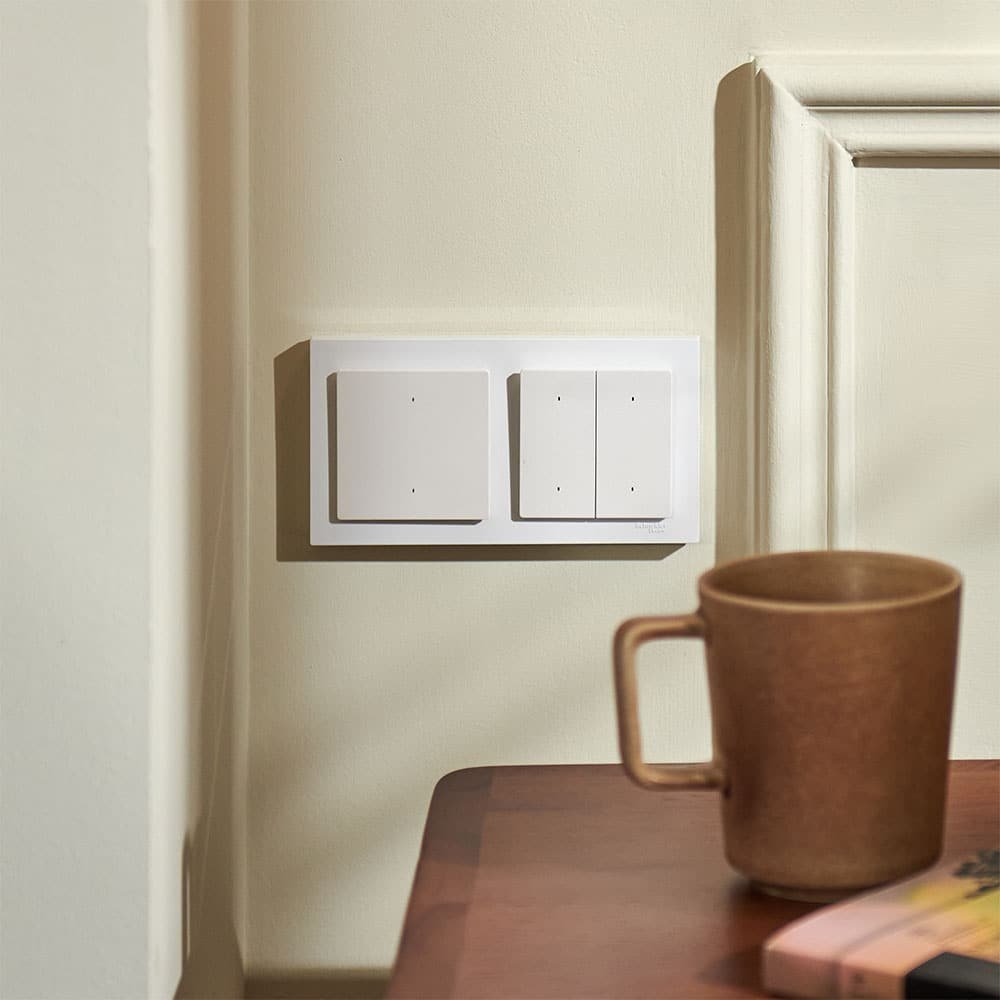
Take the Aqara Light Switch H2, which you can buy in Singapore right now from HomeSmart at S$81–90 depending on gang count. Aqara’s H2 documentation has it defaulting to Thread mode out of the box. Want Zigbee instead? Aqara’s own support documentation walks you through it: factory reset the device (ten rapid presses on any button), open Aqara Home, tap Add Accessory, scan the Matter code, and select Zigbee on the Switch Protocol page.
That’s not a toggle in a settings menu. That’s a full decommission and re-pair, done at the device, physically. Fine on a wall switch at chest height. Considerably less fine on a downlight you’ve just recessed into a false ceiling above a wardrobe, or a strip you’ve adhesived into a cove.
Aqara hasn’t published the commissioning procedure for the new T2 lights yet, so treat the specifics as provisional. But the architecture is the same one Aqara has shipped across its dual-protocol line for two years, and there’s no indication the lights break the pattern. Plan on choosing once.
The case for Thread
Thread’s real advantage in a Singapore flat isn’t speed. It’s mesh physics, and it’s the one thing that genuinely fights our building materials.
Every mains-powered Thread device automatically becomes a Thread Router, forwarding traffic for its neighbours. Battery sensors sleep and lean on a parent; anything plugged into the wall does work for the network. So the more mains-powered Thread devices you install, the denser and more self-healing your mesh gets — for free, with no extra hardware.
Now think about where lights live. Ceiling centre of every room. Cove perimeter of the living room. Corner of the bedroom. That is, almost by accident, the best possible distribution of mesh nodes in a flat. Structural lighting is the ideal Thread backbone, and it’s exactly the layout that reinforced concrete walls and the long dumbbell corridors in 4- and 5-room HDB units otherwise punish. If your Thread mesh keeps dropping the far bedroom, our guide to building a Matter mesh through HDB concrete has the full diagnosis — but “install mains-powered Thread lights in the rooms between the border router and the dead spot” is most of the cure.
The second Thread argument is independence. In Thread mode, the light joins Matter directly. No Aqara hub sits in the path. It pairs into Apple Home, Google Home, Alexa, SmartThings, Home Assistant or Homey as a first-class Matter device, and it keeps working if Aqara’s cloud has a bad day or Aqara loses interest in the product line — a failure mode worth taking seriously given how many smart home devices arrive with an unadvertised expiry date.
You do still need a Thread Border Router to bridge the Thread mesh onto your home network. If you own a HomePod mini, an Apple TV 4K, a recent Nest Hub, a SmartThings hub, or one of the Wi-Fi 7 routers with a border router built in, you already have one and this costs you nothing extra. Running two border routers is better than one, incidentally — if a border router drops off the network, the others keep the mesh reachable.
The case for Zigbee
Zigbee mode puts the light back inside Aqara’s own world, and Aqara’s own world is still meaningfully richer than what Matter exposes.
This is the honest limitation of Matter in 2026: it standardises the common denominator. Vendor-specific behaviour — Aqara’s MARS-Tech tuning, LED indicator configuration, granular scene parameters, and firmware-level extras — surfaces in Aqara Home over Zigbee and frequently doesn’t survive the trip through Matter. HomeSmart’s own product copy for the H2 switch says exactly this: Thread for third-party integration, Zigbee “for full feature access.”
More importantly, Zigbee mode is where your existing Aqara sensors live. If you already run a flat full of Aqara door sensors, an FP2 or FP300 presence sensor, a water leak sensor under the sink and a T1 strip behind the TV, those automations are authored in Aqara Home. Adding a new light in Thread mode means it’s not natively in Aqara Home — you’d be orchestrating it from a different app, or routing everything through Home Assistant to reunite them.
That’s the real trade. Not “which protocol is technically better,” but which app is going to own your automations.
Aqara has been easy to buy in Singapore for years and priced well below the Western incumbents, so for a lot of readers here this question is already answered by a drawer’s worth of accumulated sensors.
What this costs in Singapore today
Since the new lights have no local price, here’s what the surrounding decision actually costs if you’re buying now:
| What | Singapore price | Why it matters |
|---|---|---|
| Aqara Hub M3 | S$267 (from S$289) | Matter controller, Thread border router and Zigbee hub. 127 Zigbee + 127 Thread devices. PoE. |
| Aqara Hub M200 | S$137 (from S$149) | Same three roles, smaller caps: 40 Zigbee + 40 Thread. PoE, 360° IR blaster. |
| Aqara Light Switch H2 | S$81–90 | The dual-protocol behaviour described above, available today. |
| Aqara LED Strip T1 | S$64 (from S$69) | 2m Zigbee-only, extensible to 10m. The T2’s predecessor — hub required. |
Note what the M3 and M200 do to this whole debate: they’re a Thread border router and a Zigbee hub in one box. Buy either and you’re not choosing an infrastructure, you’re choosing a per-device mode. That’s the genuinely comfortable position, and it’s why the hub question is worth settling before the light question — HomeSmart’s guide to choosing an Aqara hub is a reasonable starting point. Watch the device caps though: 40 devices on the M200 sounds generous until you remember a fully kitted 4-room flat with per-zone lighting eats that fast. The M3’s 127 is the safer ceiling if you’re building out a whole reno.
So which one should you pick?
My actual recommendation, in order of how well it fits Singapore flats:
Pick Thread if you’re starting fresh, you already own a HomePod mini or Apple TV or Nest Hub, and your automations live in Apple Home or Google Home. Also pick Thread if your flat has a coverage problem — the mesh-densifying effect of mains-powered lights is worth more than any Aqara-specific feature you’ll lose.
Pick Zigbee if you already have an Aqara hub and a fleet of Aqara sensors, and your automations are written in Aqara Home. Don’t split your logic across two apps to chase a protocol badge. This is most existing Aqara owners in Singapore, and it’s a completely defensible answer.
Pick Zigbee if you’re on Home Assistant, too — counterintuitively. HA speaks Zigbee natively through a coordinator stick, gives you full device attributes, and spares you the Matter-over-Thread commissioning quirks that still generate open availability bugs against Aqara devices. If you’re already deep in HA, our hardware guide covers the coordinator side.
And whatever you pick: decide before installation, not after. For anything going into a ceiling — the LED Downlight T2 especially — commission the device in your chosen mode on the workbench, confirm it appears in the right app, run one test automation, then install it. Ten minutes of testing on a table beats an hour on a ladder with a screwdriver and a ten-press reset sequence. If you’re mid-renovation, this belongs on the same list as your smart home wiring checklist.
The bigger picture
Dual-protocol hardware is Aqara hedging, and the hedge is rational. Matter is the future and Thread is the better radio, but Matter still can’t express everything a vendor wants to ship, and Aqara isn’t willing to dumb down its own ecosystem to prove a point about standards. Shipping both radios and letting the buyer choose is the honest response to a transition that isn’t finished.
It does, however, move the burden onto you. Two years ago you bought an Aqara light and it was a Zigbee light. Now you buy an Aqara light and you’re making a network architecture decision at the point of installation, usually without realising it, sometimes on a ladder.
That’s the actual news out of IFA. The lumens are fine. The zone counts are competitive. But the interesting spec is the one that asks you a question — and now you know which way to answer it.
Prices quoted are Singapore retail as listed at time of writing and move with promotions. The IFA 2026 lighting range had no announced pricing or regional availability as of publication.