If there’s one smart-home gadget that earns its keep in a Singapore home faster than any other, it’s the robot vacuum. Our flats are compact, mostly hard-floored, and coated in a relentless film of fine dust that drifts in through the windows — plus enough shed hair to knit a second pet. A good robot doesn’t just vacuum; in 2026 it mops your tiles, washes and dries its own mop, empties itself for two months at a stretch, and does it all while you’re at work. The catch is that the market has gone slightly mad: suction numbers that read like horsepower figures, robots that grow legs to climb your bomb-shelter threshold, and recommended retail prices that are almost fiction because everything is “perpetually on sale.”
So let’s cut through it. Here are the robot vacuums genuinely worth buying for an HDB flat or condo this year, what actually matters when you’re choosing one, and the real Singapore prices you’ll pay — not the fantasy RRPs.
Why a robot vacuum makes so much sense here
Three things about Singapore living make this the highest-value automation you can buy.
First, our floors are almost all hard — porcelain tile, vinyl, engineered timber — which is exactly where robot mopping shines and where carpets (the traditional robot-vacuum weakness) simply don’t exist. Second, the dust load is constant: open windows, construction next door, and the odd haze week mean fine particulate settles daily, so a robot that runs every morning keeps things genuinely cleaner than a weekly manual sweep. Third, flats are small, so even a mid-tier robot maps the whole place in one charge and the running time is a non-issue.
The flip side is that our homes are obstacle courses. Thresholds between rooms, the raised lip at the bomb shelter and bathrooms, low-clearance platform beds and sofas, and cables everywhere. That’s where the 2026 hardware race actually matters — and it’s the lens I’d use to choose.
What actually matters when you buy for an HDB or condo
Mopping is the whole point
On tile, vacuuming alone leaves a dull film. The meaningful differences between 2026 robots are almost all about the mop: does it lift when it hits a rug, does the dock wash the pad with hot water, and does it dry the pad afterwards so your utility corner doesn’t smell like a wet dishcloth in our humidity? Hot-water washing and hot-air drying used to be flagship-only; they’ve now trickled down to sub-S$700 models, and they’re the features I’d prioritise over another 5,000 Pa of suction.
Mind the dock — and whether you can plumb it
The robot is small; the dock is not. An all-in-one base that empties dust and washes mops is roughly the size of a small bin, and it needs a spot near a power point with a bit of breathing room. In a compact HDB kitchen or yard that’s a real planning constraint — measure before you buy. If you’re in a condo with a nearby floor trap or tap, several 2026 docks can plumb directly into your water line and drain, so you never refill or empty a tank again. Renters and most HDB dwellers will stick with the tank-based version, which is fine — just know you’ll top up clean water every few days.
Low profile and the threshold problem
Measure the clearance under your lowest furniture. Many platform beds and TV consoles sit around 9–10cm off the floor, and a chunky robot with a turret-style LiDAR bump (often 10cm+) simply won’t fit. Slim is the new battleground: the best models have either dropped the raised sensor entirely or retract it on the fly. Thresholds are the other test — if your rooms have raised dividers or you’ve got a split-level, look specifically at climbing ability, because the entry-level robots top out around 2cm and will strand themselves.
Tangle-free brushes are non-negotiable
If anyone in the house has long hair — or you have a cat or dog — hair wrapping around the roller is the number-one maintenance headache. The 2026 flagships have largely solved this with cutting combs and dual or V-shaped rollers that actively shed hair into the bin. It’s worth paying up for.
(Quick reality check: prices below are what I’ve seen in Singapore around July 2026. Robot vacuums discount more aggressively than almost any other category, so treat the recommended retail prices as ceilings and shop the promos.)
The picks
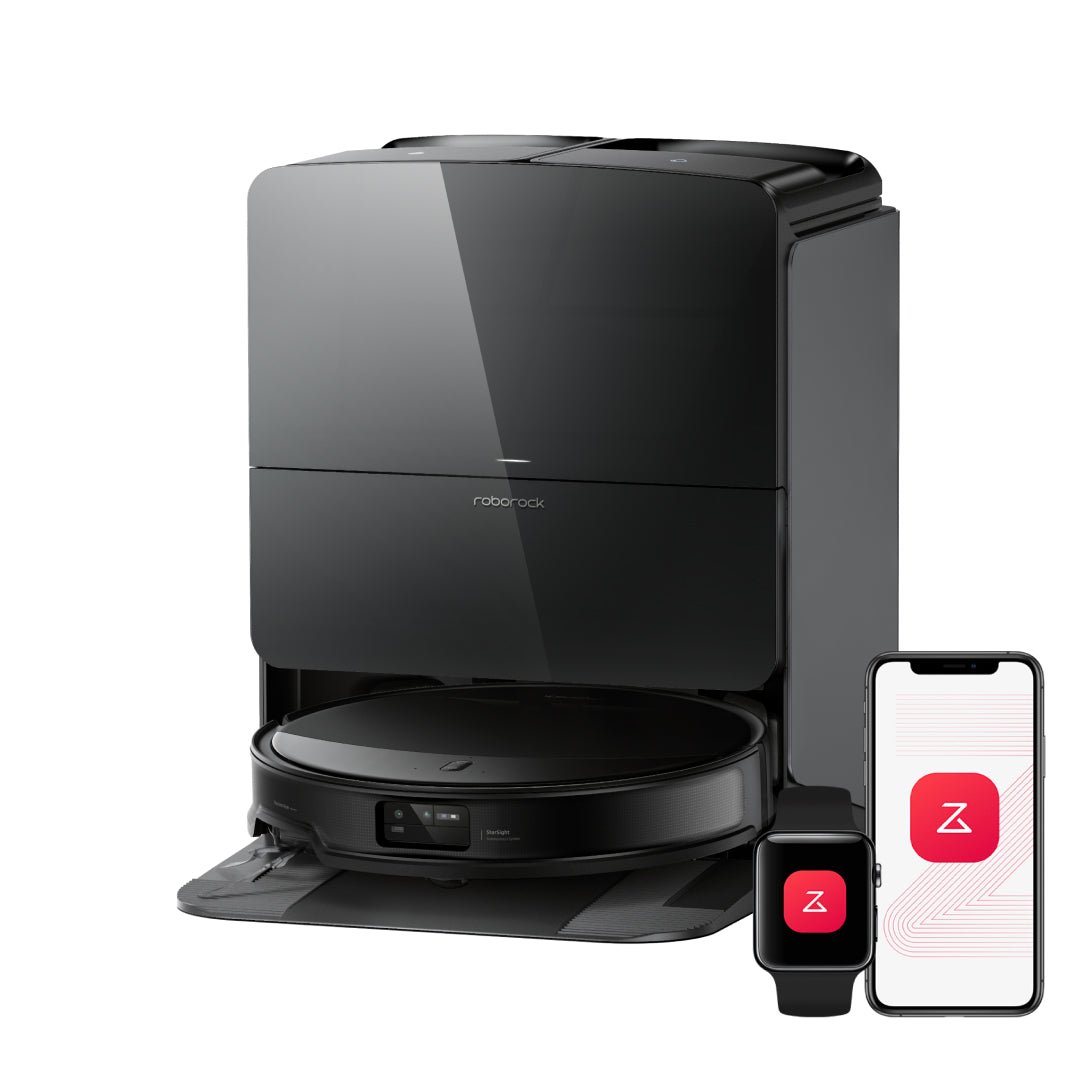
Best overall: Roborock Saros 10R
The Roborock Saros 10R is the one I’d point most people at, and it’s the robot that best answers Singapore’s specific problems. The headline trick is the body: at just 7.98cm tall with no raised LiDAR turret — it navigates with Roborock’s StarSight solid-state system instead — it slides under furniture that stops almost everything else. It pairs that with a genuinely monstrous 20,000 Pa of suction, a dual anti-tangle system that keeps hair out of the roller, and an AdaptiLift chassis that lifts the whole robot to clamber over thresholds up to about 4cm. The dock washes the mop pads in hot water and dries them with warm air, which is exactly what you want in our climate.
It’s not cheap, but the real price is far below the fantasy RRP: Courts has listed it around S$1,599 (down from a nominal S$2,399.90), and I’ve seen it closer to S$1,300 on Amazon.sg. For a do-everything robot that actually fits a Singapore flat, that’s the sweet spot. RTINGS rates it among the best robots it has tested, and I agree.
Best value flagship: Dreame X50 Ultra
If your home has awkward level changes — a sunken living room, a raised study, or thresholds that defeat lesser robots — the Dreame X50 Ultra has a party trick nothing else here matches: retractable legs. Its ProLeap system physically lifts and steps the robot over obstacles up to 6cm high, so it clears bomb-shelter lips and multi-room dividers that would strand a standard chassis. Back that with 20,000 Pa of VorMax suction, an extending mop arm that reaches into corners, and an 80°C hot-water mop wash at the dock, and you’ve got a flagship that undercuts its rivals.
The reason it’s my “value flagship” is the price: Dreame’s own Singapore store has been running it at S$1,099 (against a S$1,799 list), which is remarkable for this feature set. It’s slightly taller than the Roborock because it retracts its sensor to 89mm rather than deleting it, so double-check your under-bed clearance — but for climbing ability and pure value, it’s the smart buy.
Best mopping: Ecovacs Deebot X8 Pro Omni
For homes that are mostly tile — which is most of us — the mop is the machine, and the Ecovacs Deebot X8 Pro Omni mops better than anything else on this list. Instead of spinning discs, it uses an OZMO Roller: a rotating mop that continuously self-washes as it goes (200 rpm, with a scraper and fresh-water re-injection) so it’s never smearing dirty water around, and it extends out of the body to press right against skirting and corners. HardwareZone’s reviewer called the roller “one of the most practical and useful improvements made to any robot vacuum,” rivalling a handheld floor washer. Suction is a still-ample 18,000 Pa with a V-shaped anti-tangle roller for hair.
Here’s the pricing game to watch: the RRP is a frankly silly S$4,299, but as that same review notes, it’s “almost perpetually on sale for 50–70% off,” landing around S$1,581 on Amazon.sg. At street price it’s excellent; never, ever pay the sticker.
Best value all-rounder: Xiaomi Robot Vacuum H50 Pro
Not everyone needs a S$1,500 robot, and the Xiaomi Robot Vacuum H50 Pro is proof you don’t have to. Launched in Singapore in May 2026 at just S$599 (with a plainer H50 at S$449), it packs 15,000 Pa of suction, dual rotary mop pads with high-speed scrubbing, and — crucially — a multifunction dock that both auto-empties dust for up to ~75 days and dries the mop with hot air. Getting hot-air mop drying at this price would have been unthinkable a year ago. It also has an extendable side brush and mop arm to reach corners, borrowed straight from the flagships.
You give up a little on obstacle avoidance finesse and outright build compared to the Roborock and Dreame, but for a typical 3- or 4-room HDB flat, the H50 Pro does 90% of what the flagships do for a third of the money. It’s the one I’d recommend to a first-time buyer without hesitation.
The wildcard: Eufy E20 (3-in-1)
The Eufy E20 does something genuinely different: it’s a detachable 3-in-1. The core unit pops out of the robot chassis and clicks into a handheld or stick-vacuum wand, so the same S$799 device is your autonomous floor robot and your grab-it-for-the-sofa cordless vacuum. For a small flat where storage is precious and you don’t want both a robot and a separate handheld cluttering the store room, that’s a clever bit of space-saving. It’s not the strongest mopper here, but as a one-device-does-it-all for a compact home, it’s worth a look.
A quick, honest word on Matter and smart-home integration
Here’s the part most buying guides skip. Despite everything you’ve read about Matter unifying the smart home, robot vacuums are still mostly outside it. Matter added a robot-vacuum device type back in version 1.2 (October 2023), and in 2026 a handful of models are starting to expose basic start / stop / return-to-dock commands to Apple Home and SmartThings — but the useful stuff (room-by-room cleaning, no-go zones, mop intensity, mapping) still lives almost entirely in each brand’s own app: Roborock, Dreamehome, Ecovacs Home and Mi Home respectively.
In practice, every robot here works with Alexa and Google Assistant for voice (“Hey Google, tell the robot to clean the kitchen”), and that’s the integration most people actually use. If you’re building routines — say, a robot that cleans automatically when everyone leaves — the reliable path is still an Aqara or presence sensor triggering an automation, or the robot’s own app schedule, rather than Matter. If you want to wire that kind of whole-home logic together, our guide to getting started with a Singapore smart home is a good primer, and an Aqara FP2 presence sensor makes a great “everyone’s out, start cleaning” trigger.
So which one should you actually buy?
- Most people: the Roborock Saros 10R — the slim body that fits under Singapore furniture, plus flagship everything, at a real-world ~S$1,300–1,600.
- Homes with thresholds or level changes: the Dreame X50 Ultra and its climbing legs, and the best value of any flagship at ~S$1,099.
- Tile-heavy homes that care most about mopping: the Ecovacs Deebot X8 Pro Omni — but only at its ~S$1,600 street price, never the S$4,299 RRP.
- Best value / first robot: the Xiaomi H50 Pro at S$599, which gives you hot-air mop drying and 15,000 Pa without the flagship tax.
- Small flat, want a handheld too: the Eufy E20 3-in-1.
Whichever you pick, the robot vacuum remains the rare gadget that pays for itself in reclaimed weekends. Pair it with a proper mopping schedule and it’ll keep our dusty, hair-strewn, tropical floors cleaner than you ever managed by hand — and it’ll do it before you’ve finished your kopi.
If you’re kitting out a first smart home on a budget, it’s worth reading our no-regrets starter kit under S$300 too — a robot vacuum is the natural next upgrade once the basics are in. Pet owners fighting a losing war with fur should also see our picks for self-cleaning litter boxes, and if it’s the haze and fine dust you’re battling, a robot paired with a good air quality monitor is the one-two punch for a genuinely cleaner flat.