Why Indoor Air Quality Suddenly Matters in Singapore (Again)
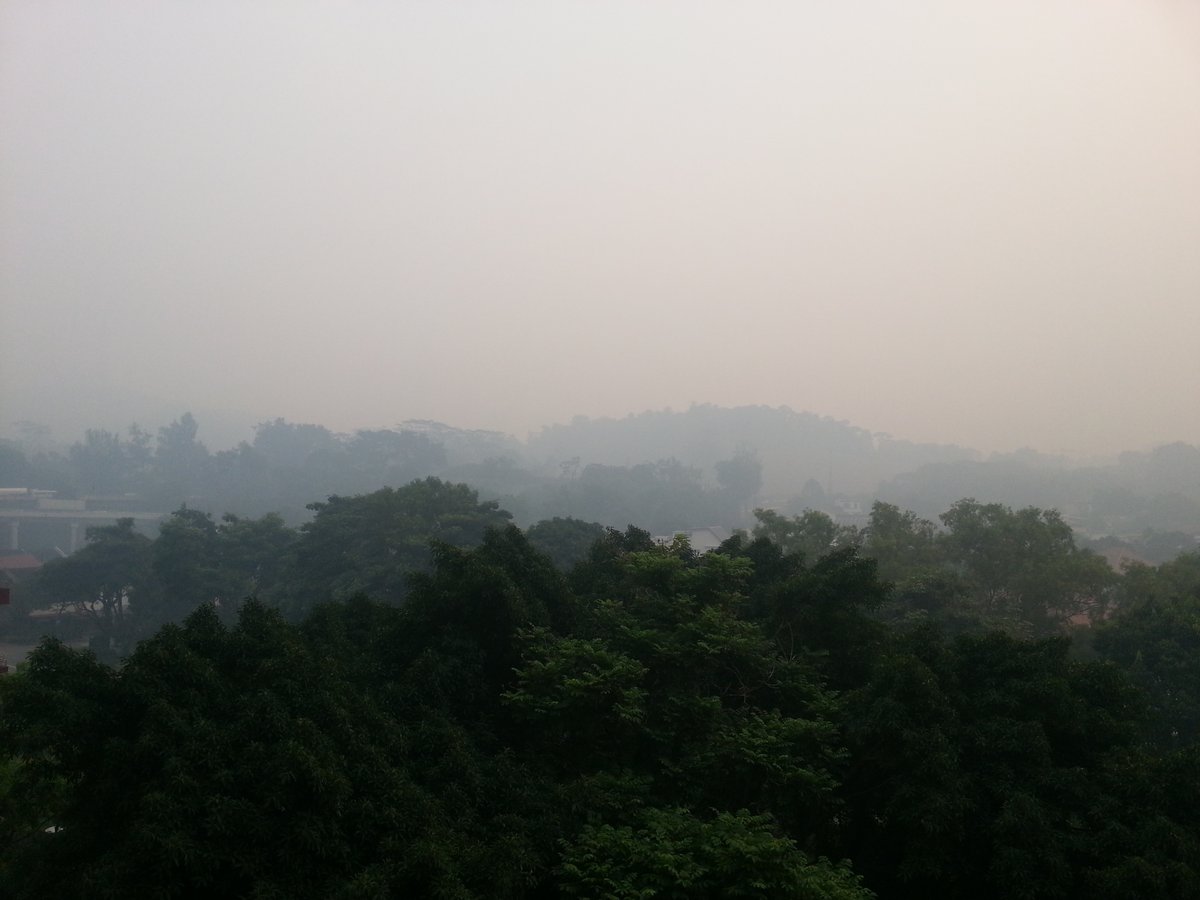
If you spent late January 2026 wondering why your throat felt scratchy and the sky over the East Coast looked like someone had turned down the saturation, you weren’t imagining it. On 24 January, the 1-hour PM2.5 reading in the east hit 162 µg/m³ — squarely in the “unhealthy” band — thanks to vegetation fires drifting south from Johor. The NEA’s haze updates have been pinging more frequently since.
Here’s the catch: NEA’s 16 outdoor monitoring stations only tell you what the air is doing outside your block. They cannot tell you that your storeroom is a CO2 swamp because you’ve been working from home with the door shut, that your new IKEA bedframe is off-gassing formaldehyde for the next six weeks, or that the contractor next door is sanding parquet and your bedroom is now full of fine wood dust.
For that, you need an indoor air quality monitor. And in 2026, the choices are genuinely good — but most of them lie about something. Here’s what actually works in a Singapore HDB or condo, what each device measures (and crucially, what it doesn’t), and which one I’d put my money on for haze season.
What You Actually Need to Measure
Before we get into products, a quick sanity check on what matters in our climate:
- PM2.5 — fine particulates from haze, cooking, candles, your neighbour’s cigarette. The big one during haze events.
- CO2 — not toxic at indoor levels, but a proxy for how stale the air is. In a sealed bedroom with two adults and the aircon recirculating, CO2 can climb past 1,500 ppm by morning. That’s the “why am I groggy” reading.
- tVOC — total volatile organic compounds. New furniture, paint, cleaning sprays, mosquito repellent, even your reed diffuser. Spikes hard during renovations.
- Temperature & humidity — table stakes, but in Singapore humidity above 70% is the mould zone. Useful for triggering dehumidifier automations.
A monitor that does PM2.5 only is a haze toy. A monitor that does CO2 only is a productivity gadget. The good ones do at least three of the four.
The Contenders
IKEA VINDSTYRKA — The Budget Workhorse
If you’ve walked through IKEA Tampines in the last year, you’ve seen this little white square with the LCD screen. The VINDSTYRKA is genuinely impressive for what IKEA charges, and inside it sits a Sensirion SEN54 module — the same sensor that costs about US$30 if you buy it bare.
What it measures: PM2.5, tVOC, temperature, humidity.
What it doesn’t: CO2. This is the gotcha. Despite confused reviews online claiming otherwise, the VINDSTYRKA has no CO2 sensor. If your concern is stuffy bedrooms, this isn’t your monitor.
Connectivity: Zigbee, paired to IKEA’s DIRIGERA hub. You can also pull it into Home Assistant via a Zigbee2MQTT coordinator — it’s well supported. No native Matter, despite IKEA’s broader Matter push with their 2026 device wave (covered in our IKEA Matter-over-Thread expansion guide).
The catch: tVOC is reported as a trend arrow (rising / stable / falling), not an absolute number. You’ll know your VOCs went up after spraying Mortein, but you won’t know by how much.
Verdict: The default pick if you mostly care about PM2.5 during haze and want a clean LCD on the shelf. Stand-alone (not paired to DIRIGERA), it still shows readings on its display, which is more than the Awair can say.
Aqara TVOC Air Quality Monitor — The HomeKit Native
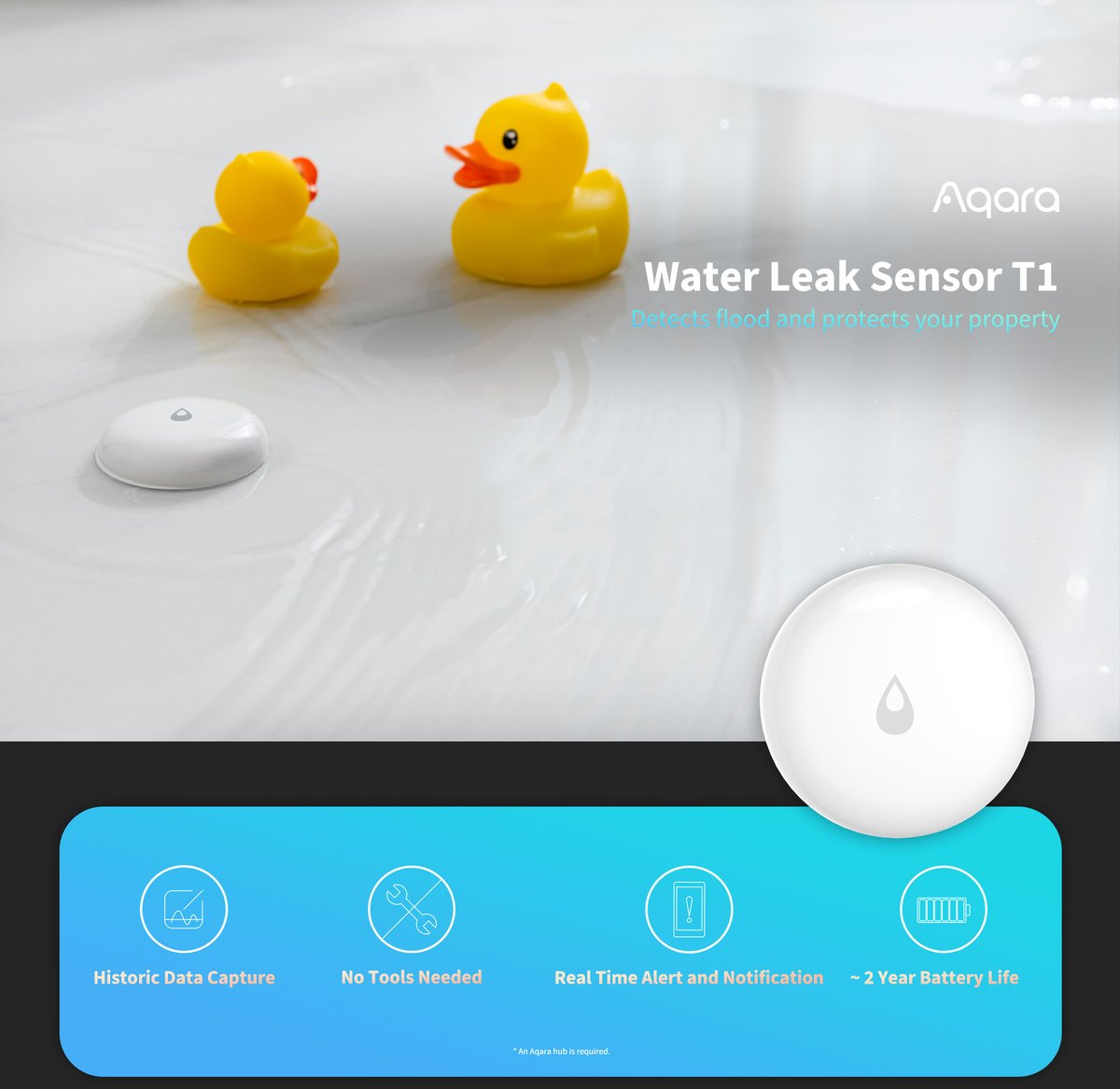
Aqara’s TVOC Air Quality Monitor (model AAQS-S01, S$69 at PFE Tech) takes a completely different approach: e-ink display, magnetic mount, battery-powered for over a year of standby. It looks like a tiny Kindle stuck to your fridge.
What it measures: TVOC (0–25 mg/m³), temperature, humidity. No PM2.5, no CO2.
Connectivity: Zigbee 3.0 — needs an Aqara hub (M2, M3, M100 — see our Aqara Hub M3 vs Home Assistant Green guide). Once paired, it exposes to Apple Home, Google Home, Alexa, IFTTT.
Why it still matters: For HomeKit users in particular, the Aqara TVOC is the easiest way to get an air-quality tile in the Home app that actually updates. Pair it with an Aqara Smart Curtain Driver and a window-mounted air purifier and you can build a real “VOC spike → close curtains → start purifier” automation.
The catch: No PM2.5. During haze, this monitor will show steady-as-she-goes while the air outside is anything but. Pair with something that does particulates if haze is your concern.
Awair Element — The All-Rounder Ageing Gracefully
The Awair Element has been the default recommendation in reviewer round-ups for years, and it’s still on the list in 2026 for one simple reason: it covers everything.
What it measures: PM2.5, CO2 (true NDIR), tVOC, temperature, humidity. Five metrics, none of them faked.
Connectivity: Wi-Fi, app-based. Works with Apple Home (via Awair’s HomeKit support), Google, Alexa, and IFTTT. No native Matter.
The catch: No screen. You read everything in the app, which means glancing at the wall tells you nothing. USB-C powered (no battery), so you’re going to have a cable running to it. And Awair’s app, while functional, has had patchy update cadence since the company changed hands.
Verdict: If you want one monitor that gives you honest readings across the four metrics that matter and you’re fine with checking your phone, this is the buy. For Singapore importers, expect to pay around US$299 plus shipping — there’s no official local distributor right now, so Amazon US or grey-market resellers on Carousell are your options.
Airthings View Plus — The One With Radon
Singapore doesn’t really have a radon problem the way North America or Northern Europe do — our granite content is lower and our buildings have less basement living. But the Airthings View Plus is still worth a look because of everything else it does.
What it measures: Radon, PM2.5, CO2, tVOC, temperature, humidity, atmospheric pressure. Seven metrics, with battery life around two years on six AA cells (or USB-C if you prefer).
Connectivity: Bluetooth + Wi-Fi, plus a customisable e-ink display that shows whichever metrics you care about. Native Matter support is not available; integration goes through the Airthings app and from there to HomeKit/Google/Alexa.
Why it’s interesting for Singapore: That e-ink display. Most monitors force you into the app; the View Plus shows you live data on the wall. For a kid’s room or a parent’s bedroom where you want a passive at-a-glance read on stuffiness, this is the one to pick.
The catch: Steep — around US$299 imported, similar to the Awair, and the Singapore radon use case is weak. You’re paying for the display and the seven-metric sweep, not the radon coverage.
Aranet4 Home — The CO2 Specialist
If you only care about one number and that number is CO2, the Aranet4 Home is unbeatable. It uses an NDIR (non-dispersive infrared) sensor — the only category of sensor that actually measures CO2 directly rather than estimating it from VOC trends.
What it measures: CO2, temperature, humidity, atmospheric pressure. That’s it.
Connectivity: Bluetooth only (the bridged Aranet4 Pro adds LoRa for multi-sensor networks, but that’s overkill for a flat). The Aranet Home app on your phone reads it via BT.
The killer feature: Seven years of battery life on two AA lithiums, an e-ink display you can read across the room, and an NDIR sensor that just works. No drift, no recalibration drama, no app crashes.
Singapore pricing: Around S$320–380 on Amazon.sg, depending on the seller. It’s not cheap, but you buy it once and it outlives your laptop.
The catch: No PM2.5, no VOC. This is a single-purpose tool. If you spend a lot of time in a closed bedroom or home office and you’ve never measured your CO2, this will probably surprise you (in a bad way) and pay for itself in better sleep.
So What Should You Actually Buy?
Three honest scenarios:
You live in an HDB and your main worry is haze. Get the VINDSTYRKA. Around S$59–69 at IKEA, accurate PM2.5, no faff. Pair it with any decent HEPA purifier and you’ve solved 80% of the problem for under S$500 total.
You’re an Apple Home / HomeKit household and you want automation. Two-device combo: Aqara TVOC for VOCs and HomeKit integration, plus a VINDSTYRKA for PM2.5. Both Zigbee, both cheap, both reliable. Run the Aqara through your existing Aqara hub. Total spend around S$130 and you get full coverage with native Apple Home tiles.
You’re a renovator, an insomniac, or someone who genuinely wants the data. Splurge on the Aranet4 Home for CO2 — it will change how you sleep — and add either an Awair Element or a VINDSTYRKA for particulates and VOCs. Yes, it’s two devices. The Aranet4 is so good at one thing that doubling up is the right call.
Skip: The Airthings View Plus, unless you’re moving into a renovated bomb shelter or a converted basement (rare in Singapore). The radon premium isn’t worth it locally.
A Note on Matter (Or the Lack of It)
You’ll notice that none of these monitors are Matter-native in 2026. That’s frustrating but expected — Matter 1.5’s air-quality cluster is still being adopted slowly by manufacturers, and the existing devices either predate it (Awair, Airthings, Aranet4) or use Zigbee with a hub bridging to HomeKit/Google (Aqara, IKEA).
The good news: Aqara’s M3 hub and IKEA’s DIRIGERA both expose their sensors to Matter controllers, so the bridge story works in practice. If you want a fully native Matter air quality sensor in 2026, you’re either waiting for the next product cycle or building it yourself with Home Assistant and an ESP32 running a Sensirion sensor.
For most people, that’s not a real limitation. Buy what works today, and the Matter-native upgrades will come when you’re ready to replace them — probably in 2028 or 2029.
The Bottom Line
The VINDSTYRKA at around S$59–69 is the easy default for Singapore: cheap, accurate where it counts (haze), and it sits on the shelf looking unobtrusive. The Aqara TVOC is the right complement if you’re already on Apple Home and want VOC alerts. And if you’ve ever woken up groggy in a closed bedroom and wondered why, the Aranet4 will answer that question with depressing clarity.
What you don’t need is to overthink this. Pick the one that maps to your actual problem (haze, stuffiness, VOCs from renovation), buy it, and move on. The whole point of measuring air quality is to fix it, not to collect another dashboard.