Choosing a baby monitor used to mean picking between a grainy walkie-talkie with a 3-inch screen or a Wi-Fi camera you’d never fully trust. In 2026, the smart nursery has split into two distinct camps — proactive AI cameras that actively watch your baby’s face and breathing, and dead-simple closed-circuit units that never touch the internet. For Singapore parents juggling a small HDB bedroom, a live-in helper, and a healthy paranoia about cloud cameras, knowing which camp you belong to matters more than chasing the highest megapixel count.
I’ve spent a lot of time with smart cameras for this site, and baby monitors are their own strange beast: the stakes are higher, the marketing is louder, and the subscription traps are real. Here’s an honest rundown of what’s actually worth buying in Singapore right now, who each one is for, and the local quirks — humidity, haze, helpers, and PDPA — that the overseas reviews never mention.
The two philosophies: AI cloud cameras vs. closed-circuit
Before you look at any single model, decide which side of the fence you’re on. It changes everything downstream — price, privacy, and how you’ll actually use the thing at 3am.
AI cloud cameras (Cubo Ai, Nanit) stream over your home Wi-Fi to an app on your phone. The upside is enormous: you can check the nursery from the office, the camera uses computer vision to flag a covered face or a baby who has climbed out of the cot, and you get sleep analytics over time. The downside is equally real — you’re dependent on your internet connection, most advanced features sit behind an annual subscription, and you’re putting a live camera feed of your child onto a company’s servers.
Closed-circuit monitors (Eufy SpaceView) ship with their own dedicated parent unit — a physical screen — and never connect to the internet at all. No app, no account, no subscription, no cloud breach risk. The trade-off is that you can only watch from within wireless range of the house, and there’s no AI cleverness whatsoever.
Neither is “better.” A first-time parent who works from home and wants breathing data will love the AI camp. A privacy-conscious parent, or anyone who’s read one too many stories about hacked nursery cams, will sleep easier with closed-circuit. Singapore’s strong PDPA culture means I meet a surprising number of parents firmly in the second group.
Cubo Ai Smart Baby Monitor 3 — the AI safety pick
If you want the most genuinely useful AI in a nursery camera, the Cubo Ai line is the one to beat, and it happens to be the easiest of the premium brands to actually buy in Singapore — it’s stocked on Amazon.sg and through regional retailers, where the previous Cubo Ai Plus still sells widely.
The newer third-generation Cubo Ai Smart Baby Monitor 3 bumps the camera to 2.5K QHD (2560 x 1440) versus the Plus model’s 1080p, and adds longer continuous playback so you can scrub back through the night. The headline features are the safety alerts: the camera is trained to recognise your baby’s face and will push an alert if the nose and mouth appear covered, if the child rolls onto their stomach, or if they cross a “danger zone” boundary you draw around the cot rails. It also does true cry detection (distinguishing a real cry from background noise), temperature and humidity sensing, and automatic capture of those milestone photos parents love.
That covered-face and rollover detection is the reason Cubo earns its keep — these are pediatrician-informed features aimed squarely at the anxieties of the newborn months. Be clear-eyed, though: no camera is a medical device or a substitute for safe-sleep practice. It’s an extra set of eyes, not a guarantee.
Pricing in Singapore typically lands around the S$300–S$400 mark depending on the stand bundle (the floor stand and travel stand cost extra). The big asterisk is the Cubo Ai Care subscription — the camera works without it, but the richer sleep analytics, longer video history, and some alert refinements live behind an annual plan. Budget for that ongoing cost before you commit.
The tropical angle worth flagging: that built-in temperature and humidity readout is genuinely handy in a Singapore nursery, where an aircon set too cold or a humid night without air-con can both disrupt a baby’s sleep. Pair it with a proper smart air quality monitor during haze season and you’ve got a well-instrumented room.
Nanit Pro — the data nerd’s monitor
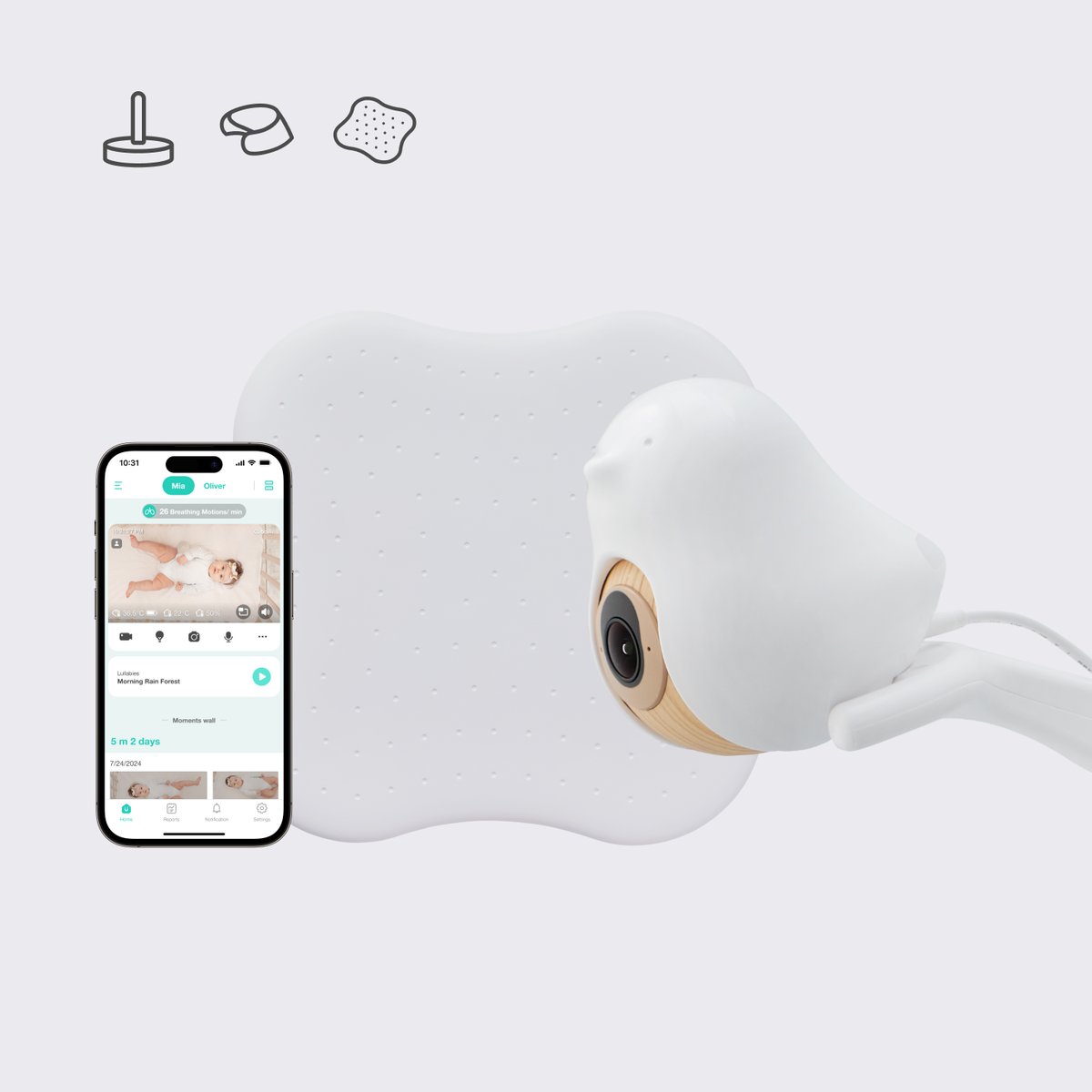
The Nanit Pro takes a different tack. Instead of focusing on real-time safety alerts, Nanit’s whole pitch is sleep science: it mounts overhead, looking straight down into the cot, and produces detailed sleep reports — total sleep, number of wake-ups, sleep efficiency scores, and personalised coaching tips through the Nanit Insights subscription.
Its cleverest trick is breathing-motion tracking. With the optional Breathing Wear band — a patterned swaddle or garment the camera reads visually — Nanit counts breaths per minute without any wearable sensor on the baby’s skin. It’s a neat, contactless approach, and for parents who obsess over sleep data (you know who you are), nothing else presents it as cleanly.
The catches are price and availability. The Nanit Pro isn’t officially distributed in Singapore — you’ll be buying through Amazon.sg’s US-shipped listings, Ubuy, or a forwarding service, with the floor-stand bundle running around US$380 (roughly S$500+) before the Insights subscription, which adds about US$100 a year. The overhead mounting also assumes a fixed cot position, which is fine in a dedicated nursery but awkward in the shared bedrooms common in smaller HDB flats. This is a monitor for parents who want analytics and have the budget — and the wall space — to match.
Eufy SpaceView E110 — the no-cloud, no-nonsense choice
Here’s the antidote to subscription fatigue. The Eufy SpaceView E110 is a throwback in the best way: a camera and a dedicated 5-inch parent monitor that talk to each other over encrypted FHSS wireless, completely independent of your home Wi-Fi and the internet. No app. No account. No cloud. No subscription, ever.
For that you get a 720p feed, a large nightstand screen, a 110-degree wide-angle lens, two-way audio, lullabies, and a sound alert. The 3am ergonomics are genuinely better than any app-based rival — you roll over, glance at the screen on the nightstand, and go back to sleep, instead of unlocking your phone, entering a passcode, and waiting for an app to load.
What you give up is remote viewing (you can’t check in from work) and any AI features — there’s no cry detection, no covered-face alert, no analytics. Range is limited to roughly the size of a home plus a bit of garden, which is a non-issue in an HDB flat or condo unit.
It’s also the value pick. Expect to pay somewhere in the S$200–S$280 range, with nothing more to spend afterwards. For a privacy-first Singapore parent — or anyone who simply wants a reliable monitor without becoming an IT administrator — this is the easy recommendation. Eufy’s a sister brand to Anker, so local availability and support are comparatively solid.
Owlet Dream Sock — the wearable wildcard
A quick word on the Owlet Dream Sock, because parents always ask. Rather than a camera, it’s a soft sock worn on the baby’s foot that tracks pulse rate and oxygen-level trends, alerting you if readings drift outside preset zones. The newer hospital-grade BabySat variant earned US FDA clearance as an actual medical device.
It’s a different category — many parents pair an Owlet sock with a camera rather than choosing between them. The honest caveat for Singapore: official distribution is thin, you’ll likely import it, and there’s an ongoing debate among pediatricians about whether continuous home pulse-ox monitoring of healthy babies causes more anxiety than it relieves (false alarms are a known issue). Buy it because a doctor recommended it for a specific reason, not for general peace of mind.
Could an Aqara camera do the job?
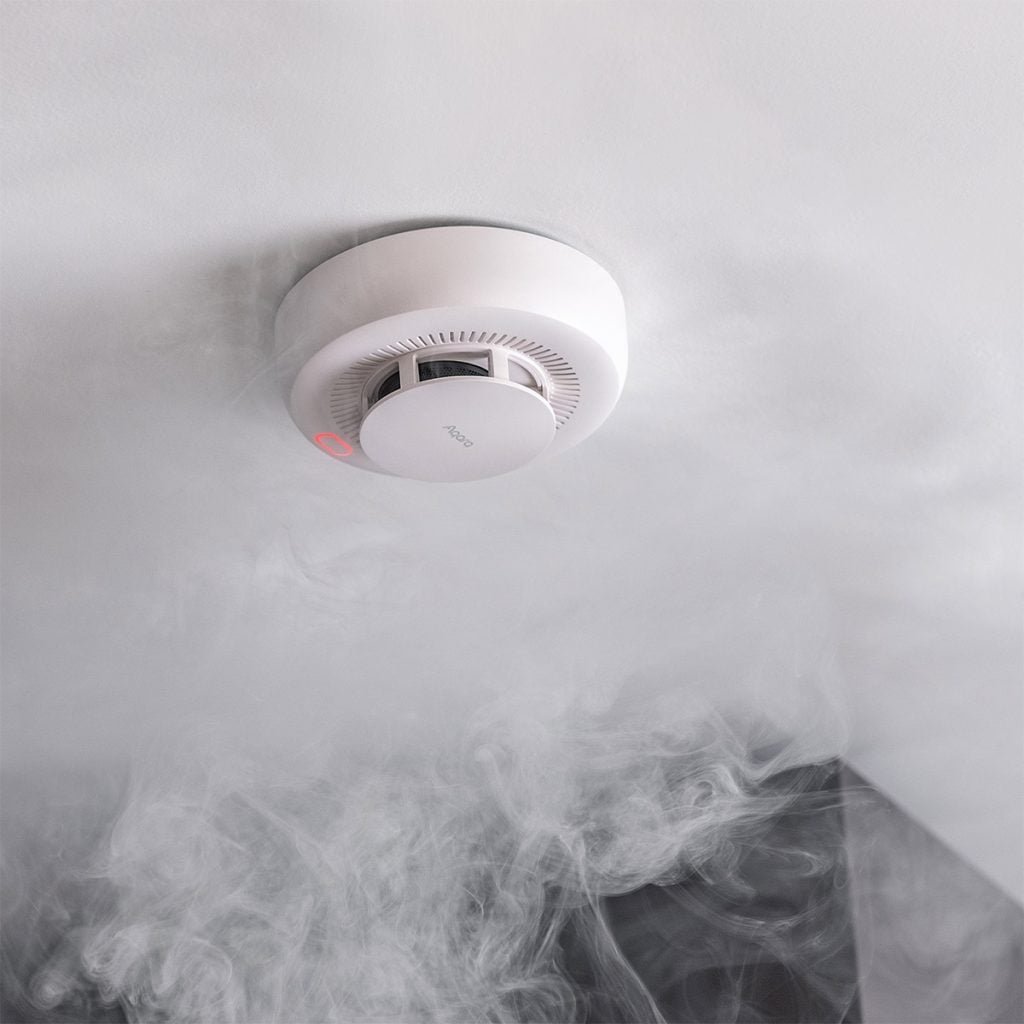
If you’re already building out a smart home and balk at baby-specific pricing, a general-purpose indoor camera can absolutely serve as a budget nursery cam. Something like the Aqara cameras available locally will give you a sharp feed, motion alerts, two-way talk, and — crucially for the smart-home crowd — local recording and integration with Apple Home, Google Home, or Home Assistant, so the footage doesn’t have to live on a third-party cloud.
What you won’t get is the baby-specific intelligence: no breathing tracking, no covered-face detection, no sleep analytics tuned for infants. For an older baby or toddler who’s past the highest-risk newborn window, a good smart camera is a perfectly sensible, far cheaper choice — and it’ll keep earning its place in your home long after the nursery years. If you already run a home camera setup for security, extending it to the nursery is the frugal move.
Singapore-specific things the overseas reviews miss
A few local realities worth weighing before you buy:
- The helper factor. Many Singapore households have a live-in domestic helper who shares childcare. A cloud camera with multi-user app access (Cubo, Nanit) lets parents and helper both view and coordinate, and lets working parents check in remotely. If that’s your setup, the AI cloud camp wins on practicality. If it makes you uncomfortable, be transparent about camera placement — PDPA and basic decency both point toward disclosure, and you should never point a nursery cam into a helper’s private space.
- Humidity and aircon. A monitor with temperature and humidity readout (Cubo) earns extra points here. Singapore nurseries swing between aircon-cold and tropical-humid, and both extremes affect infant sleep.
- Wi-Fi reliability. Cloud cameras are only as good as your router. Thick HDB and condo concrete walls murder Wi-Fi; if the nursery is far from the router, sort out your mesh network before relying on a cloud monitor — or go closed-circuit with Eufy and sidestep the problem entirely.
- Power and outlets. These cameras need constant power. Plan a socket near the cot, and if you’re nervous about outages, a small UPS keeps the feed alive during a trip.
So which should you buy?
- Want the smartest, safest AI camera and easiest local availability? The Cubo Ai Smart Baby Monitor 3 — just factor in the Cubo Ai Care subscription.
- Obsessed with sleep data and have the budget? The Nanit Pro, accepting the import hassle and Insights fee.
- Privacy-first, subscription-allergic, or just want simple? The Eufy SpaceView E110 — best value, zero cloud, zero recurring cost.
- Already deep in a smart home, or watching a toddler past the newborn stage? A standard Aqara indoor camera does the job for far less.
The honest takeaway: the “best” baby monitor is the one that matches your anxiety profile and your privacy comfort, not the one with the longest spec sheet. Singapore parents are well served at both ends of the spectrum in 2026 — buy for how you’ll actually use it at 3am, and ignore the fear-based upselling along the way.