Walk into almost any HDB flat or condo on handover day and you’ll find the same thing bolted to the living room ceiling: a builder-grade fluorescent batten or a basic LED “oyster” panel. It works. It’s also the single least considered light in your entire home — a flat, cold slab that you can’t dim, can’t warm up at night, and definitely can’t automate.
Here’s the frustrating part for anyone building a smart home in Singapore: you can’t fix a ceiling fixture with a smart bulb. There’s no E27 socket to screw into. And you can’t fix it with smart downlights either, unless you’re mid-renovation and ready to hack the ceiling. The ceiling light is its own category, and for existing flats it’s often the most impactful single upgrade you can make — one fixture that covers an entire room, replaced in an afternoon.
The good news is that 2026 has finally given us proper options at every price point, including a brand-new hub-free Matter model from SwitchBot that landed at the end of June. Let’s get into what’s actually worth mounting.
Why a ceiling light, not a bulb or a downlight
Quick reality check on the three ways to do smart lighting overhead, because people mix them up constantly:
- Smart bulbs need a socket — a pendant lamp, a track head, a bedside lamp. Most HDB main lights don’t have one, which is exactly why a screw-in bulb can’t solve your living room.
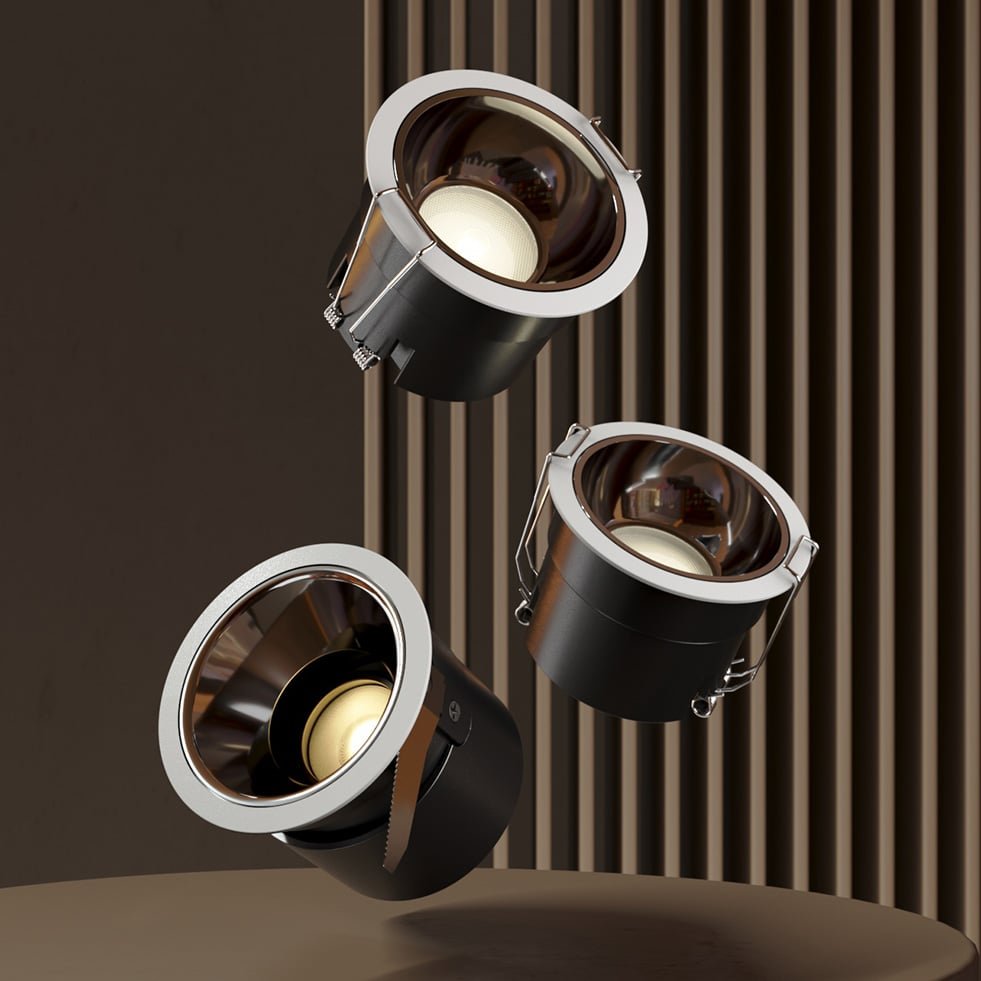
- Smart downlights are the recessed spots you plan into a renovation. Beautiful, but they mean a false ceiling, an electrician, and a reno budget. That’s a different project — see our downlights guide if you’re renovating.
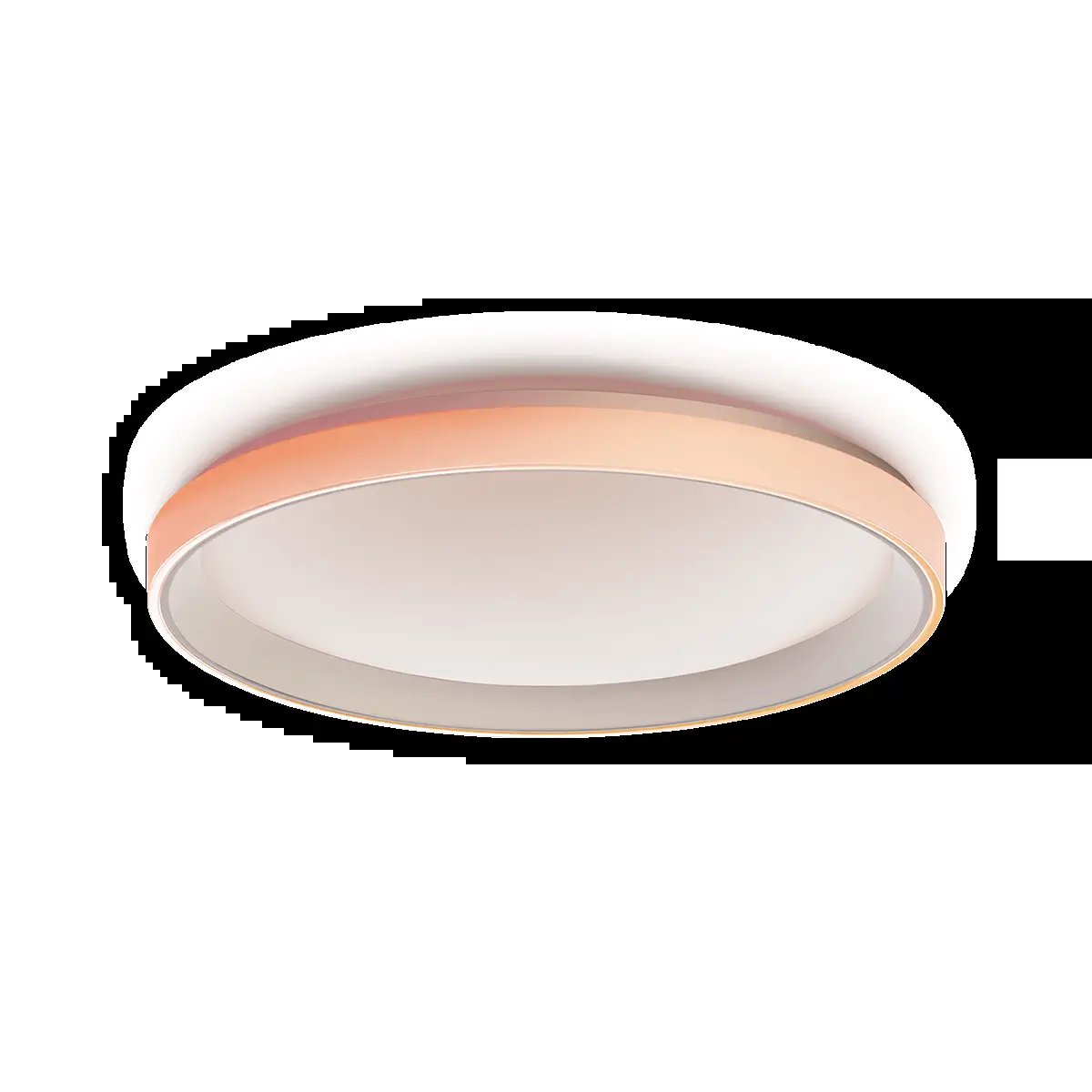
- Smart ceiling lights are surface-mounted fixtures — the flush “oyster” or panel that replaces whatever the developer installed. No false ceiling, no socket needed. You unscrew the old fixture, wire up the new one at the ceiling rose, and you’re done.
For the vast majority of Singaporeans living in an already-finished flat — especially renters and anyone who doesn’t want to touch the ceiling — the surface-mounted smart ceiling light is the sweet spot. One device lights the whole room, and you get dimming, tunable white, and often full colour without a single lamp cluttering your floor.
What actually matters in a tropical HDB
Before the product rundown, here’s what to weigh — the stuff that genuinely changes your day-to-day, not the marketing bullet points.
Brightness. Singapore living rooms and bedrooms are bright by default and we’re used to it. For a typical HDB living room (roughly a 3–4m span), aim for 3,000 lumens or more. A bedroom is comfortable at 2,000–3,000. Anything under 1,500 lumens is a mood light, not a main light — fine for a study nook, underwhelming for a hall.
Tunable white is non-negotiable; RGB is a nice-to-have. The feature you’ll actually use every day is colour temperature — cool 6,500K daylight for cleaning and WFH focus, warm 2,700K in the evening so you’re not blasting your circadian rhythm before bed. That matters even more here, where we run these lights from early evening well past midnight. Full RGB colour is fun for Deepavali, CNY, or a movie night, but be honest about whether you’ll use it beyond the first week.
Protocol. This is where the choice gets real. Zigbee (Aqara) is rock-solid and local but needs a hub. Wi-Fi (Yeelight, SwitchBot) skips the hub but leans on your router and, sometimes, the cloud. Matter is the new lingua franca that lets any of them talk to Apple Home, Google Home, and Alexa — but as you’ll see, “Matter support” means very different things depending on the brand.
Renter-friendliness. A ceiling light is wired in, so it’s less pack-and-go than a plug-in lamp. But it’s still reversible: keep your original fixture in a box and swap it back when you move out. Just factor in that you (or an electrician) will do the wiring twice.
The contenders
Aqara Ceiling Light T1M — the value RGB+IC champion
If you want the most light and the most colour for the least money, the Aqara Ceiling Light T1M is almost embarrassingly good value. It’s a 495mm square panel pushing 3,450 lumens at 40W, with full 2,700K–6,500K tunable white, RGB+IC gradient effects (individually addressable zones, so you get flowing multi-colour scenes, not one flat colour), and a CRI above 90 for accurate, non-washed-out colour. In Singapore it typically runs S$55–S$89 depending on the dealer — genuinely cheap for what you get.
The catch, and it’s an important one: the T1M is a Zigbee device and it requires an Aqara hub (an M-series hub like the M100, M2, or M3). Once that hub is in place, the light exposes itself to Apple Home — including HomeKit Adaptive Lighting, which automatically shifts colour temperature through the day — as well as Alexa, Google, and, via the hub, Matter. If you already run Aqara sensors or an Aqara lock, you almost certainly have a hub and this is a no-brainer. If you don’t, budget for one; our friends at HomeSmart have a guide to choosing an Aqara hub that’s worth a read before you buy.
The upside of that Zigbee requirement is reliability: the light joins a local mesh, acts as a repeater for your other Aqara devices, and keeps working even if your internet drops.
Aqara Ceiling Light L1-350 — the no-fuss tunable-white pick
Not everyone wants a colour disco overhead. The Aqara Ceiling Light L1-350 is the grown-up option: a 350mm round fixture, 24W, tunable white only (no RGB), with the same HomeKit Adaptive Lighting support once it’s paired to an Aqara hub. It’s ideal for a bedroom, study, or kitchen where you want warm-to-cool control and dimming but couldn’t care less about purple mood lighting.
Same Zigbee-plus-hub requirement applies, and it’s a smaller, dimmer fixture than the T1M — 24W is right for a bedroom, a bit modest for a big living hall. One thing to check when buying locally: make sure you’re getting the global version rather than a China-server unit, which is why sticking to a proper Singapore retailer matters. Expect it in the S$60–S$80 range.
Yeelight Arwen — the Singapore default
Ask around and you’ll find Yeelight is probably the most-installed smart ceiling light in Singapore flats. The Arwen series — the 450S and the larger 550S — are genuinely lovely fixtures: slim metal-framed designs, a bright main light of up to 3,500 lumens (the 550S is a 50W, 555mm panel), tunable 2,700K–6,500K white, plus a separate RGB ambient backlight ring around the edge for accent colour. The 550S is plenty for a typical HDB living room or a big master bedroom. Pricing starts from around S$200 and climbs with size, so this is the premium pick of the group.
Here’s the honest bit that a lot of listings gloss over: most Arwen ceiling lights are Wi-Fi devices that run on the Xiaomi Home (Mi Home) or Yeelight app, with Google Home and Alexa support, and HomeKit on the supported SKUs. What they generally don’t have is native Matter. Yeelight’s Matter strategy is a separate Matter bridge and new Matter-over-Thread bulbs rolling out through 2026 — it doesn’t retroactively make an existing Arwen a Matter device. So if a seamless, hub-free Matter setup is your goal, read the exact SKU’s spec sheet before you pay, and don’t assume the Xiaomi ecosystem plays nicely with an Apple-first home. If you’re already deep in Xiaomi/Mi Home, though, the Arwen is the most polished-looking fixture here.
SwitchBot RGBICWW Ceiling Light — the new hub-free Matter option
This is the interesting one, and the reason this guide exists in July 2026. SwitchBot launched its RGBICWW Ceiling Light on 29 June 2026, and it does the thing everyone’s been waiting for: native Matter-over-Wi-Fi, no hub required. It pairs directly to Apple Home, Google Home, Alexa, Home Assistant, and Homey.
Specs are strong for the price. Per SwitchBot’s own listing, there are two sizes — a 12-inch model at 2,000 lumens and a 15-inch at 3,200 lumens — both a slim 52mm thick, tunable 2,700K–6,500K, RGBIC zoned colour, CRI 90+, with 26 preset scenes and smooth 1–100% dimming. US pricing is US$49.99 and US$79.99 respectively (SwitchBot ran a launch discount at release), so figure roughly S$70–S$120 landed if you import via SwitchBot’s own store or Amazon, since it isn’t on Singapore retail shelves yet at the time of writing.
That last point is the honest caveat: availability. SwitchBot ships to Singapore, but you’re buying direct rather than picking it up from a local dealer with local warranty support, and the 15-inch’s 3,200 lumens is good-not-great for a large hall. But for a bedroom or study where you want true plug-and-play Matter without committing to anyone’s hub, it’s the most future-proof pick on this list — and by a distance the cheapest way into native Matter overhead lighting.
Protocol reality check for an HDB
Let me save you a support-forum rabbit hole. Here’s how the three approaches actually behave in a Singapore flat:
- Zigbee + hub (Aqara): The most reliable and the most local. Lights keep working when your internet doesn’t, and the mesh gets stronger the more Aqara devices you add — genuinely useful through concrete HDB walls. Cost: you must own a hub. Best if you’re building an Aqara ecosystem anyway.
- Wi-Fi, app-based (Yeelight): No hub, but every light is another device hanging off your router, and some features route through the cloud. Fine for a handful of fixtures; gets flaky if you’ve got a router straining under 40 smart devices. Best if you live in Xiaomi/Mi Home.
- Native Matter-over-Wi-Fi (SwitchBot): The new default we’ve wanted — hub-free, works across Apple/Google/Alexa/Home Assistant, controlled locally. Still Wi-Fi, so the same router-load caveat applies, but you’re not locked to one brand’s app. Best if you want flexibility and future-proofing.
If you want the deeper background on why Matter matters and where it still falls short, our downlights guide and the under-S$300 starter kit both dig into ecosystem choices.
Which one should you buy?
- You already run Aqara (or plan to): The Aqara T1M is the value king — 3,450 lumens of tunable colour for well under S$90. Get the L1-350 instead if you only want tunable white in a bedroom.
- You’re an Apple Home household and want zero hubs: The SwitchBot RGBICWW is the cleanest fit — native Matter, direct HomeKit pairing, no bridge to babysit.
- You live in Xiaomi/Mi Home and want the best-looking fixture: The Yeelight Arwen is the premium, most attractive choice — just go in clear-eyed that it’s Wi-Fi and not natively Matter.
- You’re renting and want reversible: Any of these works if you keep the original fixture. SwitchBot and Yeelight (no hub to lug around, in Yeelight’s case just the app) are marginally simpler to un-install and re-install at the next place.
Installation and HDB wiring notes
A ceiling light is mains-wired, so a few practical points before you get the ladder out:
- Get a licensed electrician (LEW) for the ceiling rose if you’re not confident. It’s live/neutral at the ceiling point, and while swapping a fixture is a 20-minute job for a pro, it is not the place to freelance. A typical fixture swap runs a modest call-out fee.
- Mind the wall switch. These lights need constant power to stay “smart.” If someone flips the physical wall switch off, the light goes fully dark and drops off the network until it’s switched back on. The usual fix is to leave the wall switch permanently on and control everything via app, voice, or a smart switch — worth planning if you don’t want family members “helpfully” cutting the power.
- Check the fitting size against your existing mounting plate. HDB ceiling points are standard, but a 495mm Aqara square or a 550mm Yeelight is a big fixture — make sure it suits the room and clears any smart ceiling fan blades.
The bottom line
The smart ceiling light has quietly become the highest-impact, lowest-hassle lighting upgrade for a finished Singapore flat — no reno, no sockets, one fixture per room. For most people the Aqara T1M is the pick: it’s cheap, bright, full-colour, and rock-solid if you’re willing to run a hub. If you’d rather skip hubs entirely, the new SwitchBot RGBICWW is the most future-proof option going, and the cheapest route into native Matter overhead. And if you want the prettiest fixture and live in the Xiaomi world, the Yeelight Arwen still earns its place — just don’t buy it expecting Matter it doesn’t have.
Whichever you choose, do yourself one favour: set it to warm 2,700K after sunset. Your sleep will thank you, and you’ll wonder how you lived under that cold builder’s batten for so long.