If you live in a Singapore HDB or condo, your bedroom probably runs blackout curtains, half-decent insulation, and an aircon set to 24 °C. Which is great for sleeping — and terrible for waking up. Sunrise here lands between 6:50 and 7:10 a.m. year-round, but you’d never know it behind the blinds. That’s where a smart wake-up light earns its keep: a gradual, dawn-simulating bedside glow that pulls you out of REM more gently than your iPhone’s “Radar” tone ever will.
The category has matured a lot in 2026. Philips finally built a dedicated Hue lamp for sleep. Hatch shipped its third-generation Restore. And the Matter ecosystem now lets your existing Hue, Aqara, or Yeelight bulbs double as sunrise simulators if you set them up correctly. Here’s what to actually buy in Singapore, with honest notes on availability, pricing, and which products are oversold.
Why a wake-up light beats your phone alarm
Light is the dominant cue for human circadian rhythm. A 30-minute brightening ramp gradually suppresses melatonin and raises cortisol, so you’re already biologically awake when the sound cue kicks in. The result is less of that “ripped out of a dream” feeling and — for most people — a noticeably better mood for the first hour of the day.
In Singapore specifically, three factors make wake-up lights more useful than in cooler climates:
- Blackout curtains are standard in HDBs because of west-facing afternoon sun and 7-Eleven LED glare from corridor lighting. You’ve engineered your bedroom to block natural dawn signals — so you need an artificial one.
- Aircon-cooled bedrooms keep you in deeper sleep longer, which makes harsh phone alarms feel more jarring than they did in your no-aircon childhood bedroom.
- Year-round consistent sunrise (~7 a.m.) means a wake-up routine you set in January still works in July, unlike in temperate countries where you’d need to shift the schedule seasonally.
The honest caveat: if you sleep with thin curtains and east-facing windows, you may already have the world’s best sunrise alarm for free. Skip this entire category.
The Picks at a Glance
| Pick | Best For | Approx. SGD | Smart Home |
|---|---|---|---|
| Philips Hue Twilight | Best overall, Hue households | $430–470 | Matter via Hue Bridge |
| Hatch Restore 3 | Sound-first sleepers, routine builders | $230 imported | Wi-Fi, no Matter |
| Lumie Bodyclock Shine 300 | App-haters, SAD/shift workers | $280 imported | None (offline) |
| Yeelight Staria Bedside Lamp Pro | Best value, Apple Home users | $90–110 | HomeKit, Google, Alexa |
| Aqara Ceiling Light T1M | Already-Aqara homes | $129 | Matter, HomeKit, Adaptive Lighting |
| SwitchBot Curtain 3 + Hub 2 | Existing curtain hackers | $300 (combo) | Matter |
Philips Hue Twilight — the best dedicated wake-up light
Hue spent two product generations dabbling in “Go to Sleep” scenes before finally building a lamp purpose-designed for the routine. The Twilight is a 33 cm bedside lamp with two independent light engines: a downward task light and an upward “halo” that projects warm color onto the wall behind it. The sunrise routine ramps the halo from deep red through orange into cool daylight white over a configurable window (you pick 10 to 60 minutes), while the downlight stays off until you’re nearly awake.
This dual-engine design is the killer feature, and one cheaper sunrise lamps can’t replicate. The reverse halo means you’re not waking up to a light shining directly in your eyes — you’re waking up to a glowing wall, which is a much closer mimic of real dawn.
Tech specs that matter: it speaks Zigbee through a Hue Bridge, or Bluetooth alone if you don’t have one. Get the Bridge. Bluetooth-only mode disables Matter, HomeKit, and routines triggered from outside the app. The Bridge unlocks all of that and lets the Twilight integrate with the rest of your smart home — useful if you want the lamp to also brighten when your Aqara FP1E presence sensor detects you walking into the bedroom at night.
Availability in Singapore is decent — official Hue retailers like Synced.sg and Threecubes stock the latest Hue lineup, and the Twilight is listed directly on philips-hue.com/en-sg with full local support. Expect retail around SGD $430–470 depending on color (black or white). That’s expensive, but cheaper than the Hatch Restore 3 once you account for shipping and the Hatch+ subscription.
Verdict: If you can stomach the price and you’re already in (or curious about) the Hue ecosystem, this is the best wake-up light you can buy in Singapore right now. If you’re not committed to Hue, scroll down.
Hatch Restore 3 — best if you want sound and a routine
The Hatch Restore 3 is less a lamp than a complete sleep-and-wake hardware platform. Same chunky tweed-wrapped puck shape as the Restore 2, with three controls: brightness wheel, alarm dismissal, and a power button. Tap it at night and you get a “wind-down” routine — guided meditation, a sleep story, slow-fade light to deep red, then white noise until you fall asleep. In the morning, gradient light plus your choice of alarm sound (nature, instrumental, or the Gilmore Girls theme song, if you’re so inclined).
The sound library is where this thing earns its keep. The Tom’s Guide 2026 roundup picks the Hatch as the best all-around because of how immersive its audio feels at low volumes. The Restore 3 added a refreshed sound library with location-based ambient packs (“El Capitan breezes,” “Malibu Beach”) and improved speaker quality over the Restore 2.
The catch: a chunk of the content sits behind the Hatch+ subscription at USD $4.99/month or $49.99/year. The free tier gives you 40+ sleep sounds and basic routines, which is honestly enough for most people. But Hatch is aggressive about pushing the upgrade prompt, which gets old.
Availability is the bigger Singapore problem. Hatch has no local distributor. You’ll need to import from Amazon US (around USD $169 retail, plus ~$30 forwarder shipping via vPost or similar). Power supply ships as US plug; you’ll need a Type G adapter unless you swap to a local 5V USB-C wall plug — the device runs on USB-C.
Verdict: Buy this if you sleep poorly and want sound routines as much as light. Skip it if you already have a HomePod or Sonos at the bedside and just want light.
Lumie Bodyclock Shine 300 — for people who hate apps
Lumie is a British brand that’s been making clinically-tested SAD lamps since the late 90s. The Bodyclock Shine 300 is the goldilocks model — bigger than the entry Glow, smaller than the Luxe — and it does exactly one thing well: a 30-minute sunrise ramp triggered by a physical button on the unit. No app. No Wi-Fi. No subscription. No firmware updates.
For shift workers, parents who don’t want their kids’ bedroom lamps connected to the internet, or anyone who’s been burned by smart products that brick themselves in firmware updates, this is a deeply unsexy but very reliable choice. The light quality is also excellent — independent reviewers consistently single out Lumie’s deep red dimmest setting as the most realistic “pre-dawn” of any sunrise lamp tested.
Singapore availability is import-only — there’s no official distributor. Expect SGD $250–290 from UK importers or Amazon UK via forwarder. Power supply is a 12V adapter that ships with a UK Type G plug, which works directly in Singapore outlets (one of the rare wins of British colonial electrical legacy).
Verdict: If you want a lamp, not a platform, this is the buy. It will outlive every Hatch, Hue, and Loftie on this list.
Yeelight Staria Bedside Lamp Pro — best value
Most people don’t actually need a dedicated wake-up lamp. They need a smart bedside lamp that can run a sunrise routine. That’s the Yeelight Staria Bedside Lamp Pro, available at Delight Singapore for around SGD $99 with the 10W Qi wireless charging base.
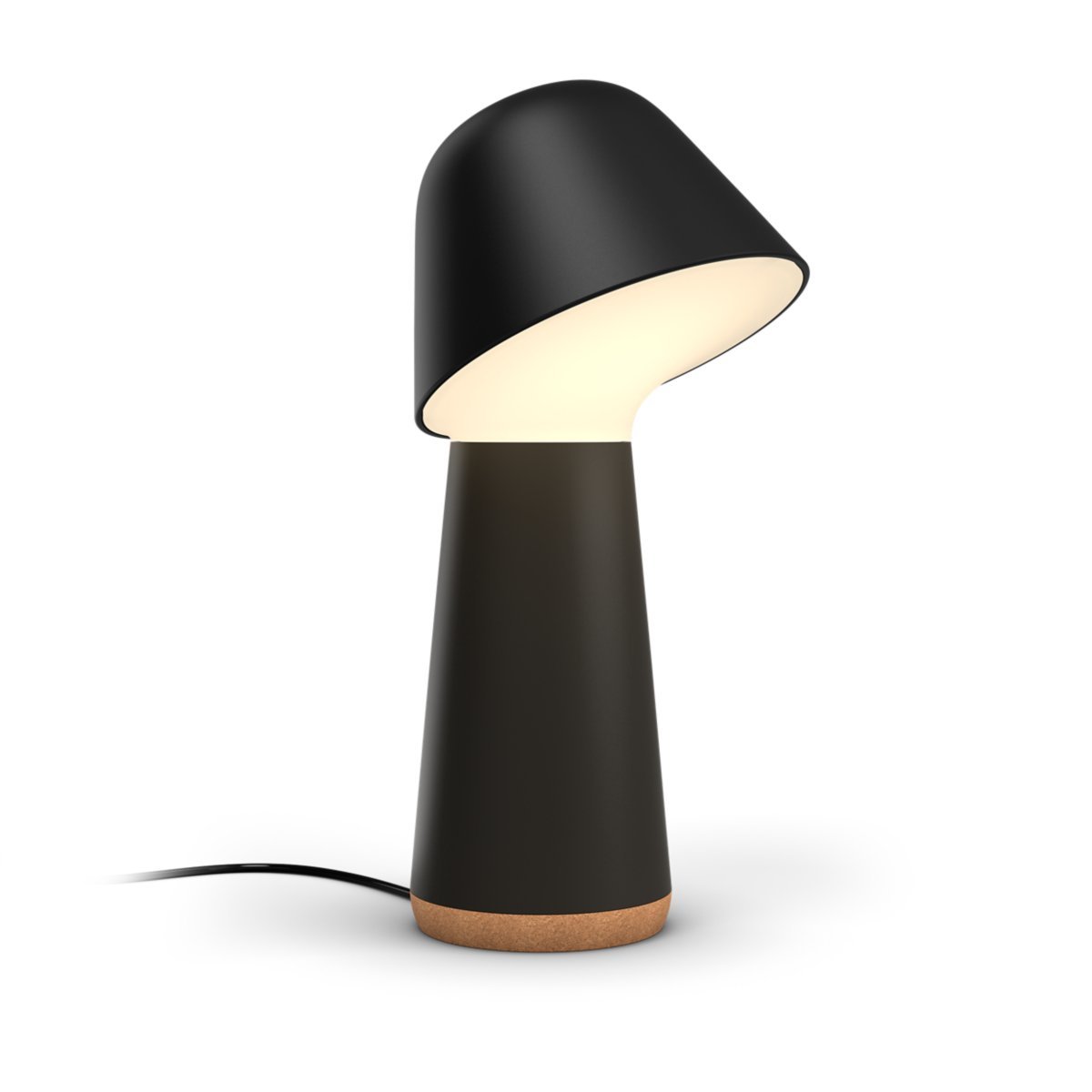
This is a mushroom-shaped bedside lamp with 2700K–6500K tunable white, full app control, and native HomeKit (no hub needed — it connects over Wi-Fi). The Yeelight app has a built-in “Sunrise” effect you can attach to a recurring alarm — it does a 15-minute ramp from off to full brightness, with optional color-temperature shift from warm to cool. There’s also a “Sunset” wind-down mode for evenings.
The downsides versus a Hue Twilight: there’s only one light engine pointing up, so the lamp itself glows rather than projecting onto the wall behind. The sunrise gradient isn’t as smooth — you can see a few discrete brightness steps. And the Yeelight app is functional but ugly.
For most Singapore HDB bedrooms, those are fine compromises at one-quarter the price. Get the Pro version specifically — the wireless charging base means you can ditch your phone’s cable, and the only difference from the standard Staria is the addition of the Qi pad.
Verdict: Best price-to-feature ratio on this list. Pair it with HomeKit’s automation tab to trigger your Apple Home aircon to drop to a cooler temp at the same time and you’ve got a genuinely well-engineered wake-up.
Aqara Ceiling Light T1M — if you’ve already gone Aqara
A lot of Singapore homes (including a chunk of our readers) are deep into Aqara’s ecosystem for switches, sensors, and locks. If that’s you, you may not need a separate bedside lamp at all. The Aqara Ceiling Light T1M is a 350mm round flush-mount with a primary 2700–6500K downlight plus a 16-million-color side light, and it’s Matter-native (no Aqara hub required for that part).
Inside the Aqara Home app, the T1M has a “Wake Up” effect under its lighting effects tab — you set a duration (5 to 30 minutes) and the light ramps up at scheduled times. Pair it with HomeKit’s Adaptive Lighting and the color temperature will also shift across the day automatically, so you wake up to warm tones, get cool daylight at noon, and shift back to warm orange for evening wind-down.
This won’t be as gentle as a bedside wake-up light because it’s mounted in the ceiling — the light hits your face from directly above as it ramps. Some people find that jarring. The fix is to angle a separate bedside lamp at the wall and use the T1M as a backup brightener.
Singapore price is around SGD $129 from PFE Tech’s Aqara store. Cheaper than any dedicated wake-up lamp, and it doubles as your main bedroom ceiling light.
Verdict: Not a wake-up lamp, but a great wake-up automation if you already need a new ceiling light anyway.
SwitchBot Curtain 3 + Hub 2 — the natural sunlight hack
The most underrated wake-up “light” in Singapore isn’t a lamp at all. It’s your existing window. If you swap your blackout curtains for a SwitchBot Curtain 3 (about SGD $130 per rod) and a SwitchBot Hub 2 (~SGD $120), you can schedule the curtains to open 30 minutes before your alarm. By 6:45 a.m., natural Singapore sunlight is already 5,000+ lux — more than any sunrise lamp will ever output.
The setup works with both Apple Home and Google Home via Matter, and the Hub 2’s location-aware automation can also trigger “30 minutes before sunrise” if you don’t want a fixed time.
The limits are obvious: it doesn’t work on cloudy mornings (more common during the December–February monsoon), it doesn’t work for west-facing bedrooms with no morning sun, and it leaks privacy at the same moment you wake up. But when conditions are right, it’s the best wake-up “light” available, and it costs less than a single Hue Twilight.
This pairs well with a separate sunrise lamp as backup for grey mornings.
What about the Loftie Lamp?
The Loftie Lamp (USD $280) has a small cult following — minimalist polycarbonate-and-steel design, three lighting modes (daytime, red nightlight, reading focus), wind-down reminder, and a 9-minute sunrise. It’s beautiful. We almost included it as a pick.
We didn’t because the 2026 owner reviews consistently flag buggy app syncing, occasional missed alarms, and Wi-Fi dependence. The hardware is gorgeous; the software isn’t there yet. Wait for v2 or buy a Hue Twilight for similar money with vastly more mature firmware.
Setup tips for Singapore bedrooms
A few things we’ve learned setting these up:
- Pair sunrise with aircon temperature. Use Apple Home or Google Home to bump the aircon up 1–2 °C ten minutes before the light kicks in. Cold rooms keep you in deep sleep longer; warming the room slightly while the light ramps creates a much smoother wake.
- Position matters more than brightness. A wake-up lamp on your nightstand pointing at the wall gives a much more natural sunrise feel than one pointing at the ceiling or your face. Hue Twilight’s reverse halo nails this; for others, just rotate the lamp.
- Don’t share the alarm with your partner if you’re on different schedules. Sunrise lamps light up the entire room. If your partner sleeps an hour longer than you, you’re going to start fights. A cheap workaround is the Aqara Vibration Sensor under each person’s side of the mattress — link the earlier sleeper’s wake-up routine to only fire when their side detects activity.
- Test the dim end before committing. The biggest difference between premium and budget sunrise lamps isn’t peak brightness — it’s how dim the first minute can be. If the ramp starts at 5% brightness, you’ll wake up jarringly. The Hue Twilight and Lumie Shine 300 both start at sub-1% deep red, which is what you want.
The bottom line
For most Singapore HDB bedrooms, get the Yeelight Staria Bedside Lamp Pro. It costs SGD $99, works with Apple Home, and does 80% of what a Hue Twilight does for a quarter of the price. Pair it with HomeKit aircon automation and you’ve got an effective wake-up routine.
If you can spend SGD $430+ and you’re already in the Hue ecosystem, the Philips Hue Twilight is the best dedicated wake-up light on the market — the dual-engine reverse halo is genuinely worth the upgrade.
If you sleep badly and want sound integration, import a Hatch Restore 3. If you hate apps, import a Lumie Bodyclock Shine 300. And if you’ve already got Aqara everywhere, just turn on Wake Up mode in the T1M ceiling light and save your money.
The worst wake-up alarm in Singapore is the one on your iPhone. Almost anything on this list is a better start to the day.