If you’ve ever come back from a long weekend in KL to find your balcony basil crispy and your money plant looking like it gave up on life, this one’s for you. Watering is the single most boring, most easily-forgotten chore in any Singapore home garden — and ironically, it’s one of the easiest things to automate. A smart tap timer screws onto your bib tap in two minutes, runs off a battery, and quietly keeps your plants alive whether you’re home or somewhere over the South China Sea.
The catch is that “smart watering” was built for sprawling Western lawns, not 1.5-metre HDB service balconies. So most of the buyer’s guides you’ll find online are useless here. Let’s fix that. Here’s what actually works for a Singapore balcony or condo planter setup in 2026, what protocol each option speaks, and where the marketing falls apart.
Why a Singapore balcony is a weird watering environment
Before we get to products, understand what you’re solving for, because it changes which device makes sense.
First, heat and sun. A west-facing HDB balcony bakes. Potted plants in our climate often need watering once or even twice a day, especially the small terracotta pots that dry out fast. That means you want a timer that can do multiple short cycles per day, not just “water once at 6am.”
Second, the monsoon problem. From November to January, the skies open up. A dumb timer will happily water your already-drowning plants in the middle of a thunderstorm. The genuinely smart units skip watering based on weather — but as we’ll see, that feature is wasted on a covered balcony where rain never reaches the pots anyway.
Third, power and plumbing. You almost never have a power outlet next to your balcony tap, so battery operation is basically mandatory. And you’re a renter or an HDB owner who doesn’t want to butcher the plumbing — so everything here screws onto a standard tap and reverses cleanly.
Fourth, the tap thread itself. This is the gotcha nobody mentions. Most of these timers are built for a 26.5 mm (G ¾") garden tap thread. Plenty of Singapore balcony bib taps are smaller or have a different spout, so you’ll often need a cheap brass adapter from any hardware shop or Lazada. Buy the timer first, then match the adapter — not the other way round.
With that out of the way, here are the units worth your money.
Eve Aqua: the Apple Home pick (and the only one with proper local control)
If your smart home already lives in Apple Home, the Eve Aqua is the one to get. It’s a battery-powered tap controller that speaks Thread and integrates fully into HomeKit, which means once it’s set up it runs locally — no cloud, no Eve account, no “the server is down so my plants died” nonsense.
That Thread support is the headline feature and the part most people get wrong. Thread needs a border router to work. If you own a HomePod mini, an Apple TV 4K, or one of the Aqara hubs that doubles as a Thread border router — like the Aqara Hub M3 — you’re sorted. If you don’t, the Eve Aqua falls back to Bluetooth and you lose remote access. So budget for the border router if you don’t have one; this isn’t a standalone gadget. (If you’re still hazy on how Thread and Matter relate, our Thread vs Matter explainer breaks it down.)
The hardware is solid: IPX4 water resistance with UV protection (important under our sun), an operating range of 1–5 bar, and a standard G ¾" thread. You can program up to seven individual watering periods a day — more than enough for thirsty potted plants. It runs on two AA batteries that last around five months in real use.
Expect to pay roughly S$150–180 via Amazon SG or specialist resellers. The two honest downsides: it’s an Apple-only product — there’s genuinely no Android app, so Android households should skip it entirely — and Bluetooth range is short, so the initial setup needs your phone right next to the tap.
Gardena Water Control Bluetooth: the no-nonsense, no-ecosystem choice
Not everyone wants to join a smart home cult just to water some pothos. The Gardena Water Control Bluetooth is for exactly those people. It’s a self-contained battery timer you configure once from your phone over Bluetooth, and then it just runs on its own schedule — no hub, no Wi-Fi, no cloud account, works on both iOS and Android.
You get up to three independent schedules, each with its own start times, durations (anywhere from one minute to nearly eight hours), and day-of-week repeats, plus a built-in scheduling assistant that suggests cycles for you. There’s a manual rain-break toggle for wet weeks. It’s powered by a single 9V battery that lasts about a year, fits both 26.5 mm (G ¾") and 33.3 mm (G1) taps, and has three status LEDs so you can see at a glance whether it’s connected, watering, or low on battery.
The trade-off is right there in the name: Bluetooth only, roughly 10 metres of range. You cannot check on it or change the schedule from the office — you have to be standing next to it. For a set-and-forget balcony, that’s often completely fine. If you want remote control and live weather skipping, Gardena sells the smart Water Control, but that one needs a separate Gardena smart Gateway, which pushes the total cost up and only makes sense if you’re buying into Gardena’s wider robotic-mower-and-sensor ecosystem. For a single balcony tap, the Bluetooth model at around S$120–150 is the smarter buy.
Orbit B-hyve: the value Wi-Fi option with real weather smarts
The Orbit B-hyve smart hose timer is the one I’d point renters and value hunters toward. It connects over both Bluetooth and Wi-Fi (the Wi-Fi models pair with a small hub or, on the newer Gen 2 single-outlet unit, connect more directly), and it works with Alexa and Google Assistant.
Its party trick is WeatherSense — it pulls local weather data and automatically skips or delays watering when rain is forecast or has just fallen. On an open, uncovered balcony or a condo’s landed-style patio, that’s genuinely useful during our monsoon months. On a fully sheltered HDB balcony where rain never touches the pots, it’s a feature you’ll switch off. Be honest with yourself about your layout before paying for it.
It screws straight onto a standard faucet, needs no installation, and runs on batteries. Pricing in Singapore is inconsistent since it’s usually a parallel import — figure somewhere around S$80–120 depending on whether you get the single-outlet or multi-zone version. No HomeKit support, so this is an Android/Alexa/Google household pick, not an Apple one.
The budget route: Tuya, RAINPOINT and Diivoo Wi-Fi timers
Walk through Shopee or Lazada and you’ll find dozens of cheap Wi-Fi hose timers from brands like RAINPOINT, Diivoo, and a sea of unbranded Tuya-app units for S$30–70. Don’t dismiss them. For basic balcony duty, a Tuya timer with a brass inlet, an IP-rated body, multiple zones, rain-delay, and Alexa/Google support does 90% of what the premium units do for a third of the price.
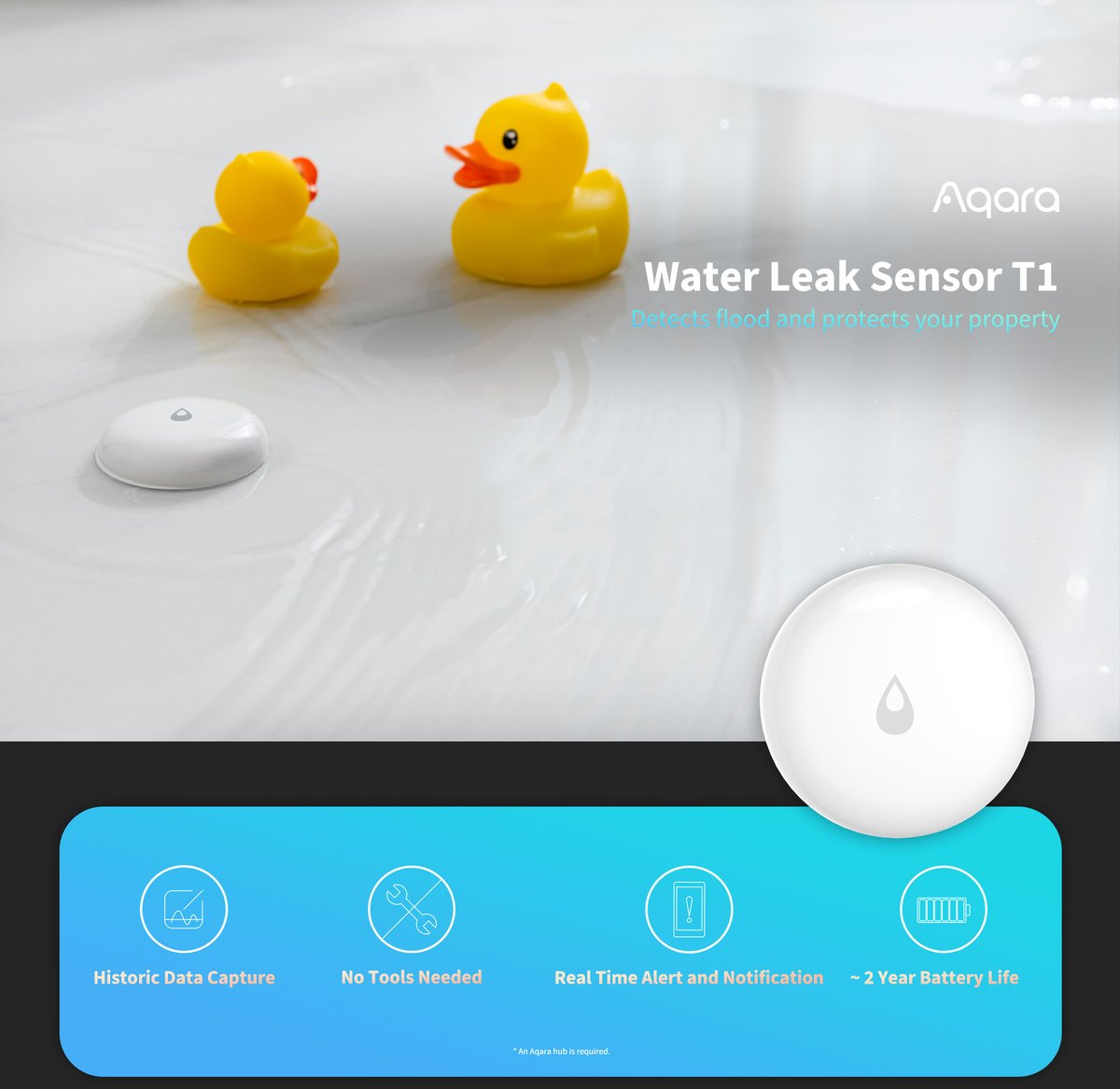
What you’re giving up: no Thread, no Matter, no HomeKit, and you’re trusting the Tuya cloud (and the vendor’s app) to stay alive. Reliability is a coin flip between models, the app translations are charming at best, and firmware updates are rare. But if you just want your chilli padi and curry leaf plants watered twice a day and you live in the Google/Alexa world anyway, a S$50 RAINPOINT does the job. Just buy from a seller with a real review history, and add a smart water leak sensor nearby — cheap timers occasionally stick open, and you do not want a flooded balcony seeping into the unit below.
What about a fully Matter-native setup?
Here’s where 2026 gets interesting. The Matter standard has supported a basic water valve device type since Matter 1.3, and Matter 1.5 added dedicated Irrigation System and Soil Sensor device types — the foundation for proper, standardised smart watering that any platform can control. The vision: a Matter valve plus a Matter soil moisture sensor that water your plants only when the soil’s actually dry, all running locally and readable from Apple Home, Google Home, SmartThings, or Home Assistant alike.
The reality in mid-2026 is earlier than the spec. The Matter-certified water valves you can actually buy today — from brands like Jinvoo and UseeLink — are mostly inline shut-off valves rather than tidy screw-on tap timers, and most still require a Matter hub to function. They’re better suited to plumbed-in drip lines than a quick balcony retrofit. Aqara’s lineup now includes a Valve Controller T1, but it’s designed as a water and gas shut-off device, not a garden irrigation timer — useful for leak prevention, not for scheduling your watering.
So if your priority is buying once and never re-doing it, a Matter valve wired to a small drip kit is the future-proof play. If you just want plants watered next week, the dedicated tap timers above are still the pragmatic choice. For the broader strategy of keeping older Wi-Fi and Zigbee gear talking to Matter, see our guide on bridging your existing devices to Matter.
How to actually set this up on a balcony
A timer alone just turns the tap on and off — you still need to get water to each pot. The standard, cheap, renter-friendly approach is a drip irrigation kit: a length of ¼" tubing running along your planter rail with adjustable drippers at each pot. These kits cost S$20–40 on Lazada or Shopee and connect straight to the timer’s outlet. Run two short cycles a day (say, 7am and 6pm, three to five minutes each) rather than one long soak — short, frequent watering suits potted plants in our heat far better and reduces runoff onto your neighbour’s laundry.
Two practical tips. One: position the timer and any drip line so a failure drains into the planter or floor trap, never toward the balcony door. Two: if your tap is on a shared bib outside the unit, check your timer is IP-rated for direct sun — our UV is brutal on cheap plastics, and a sun-cracked housing is the most common way these things die.
So which one should you buy?
- Apple household, want it done right: Eve Aqua, plus a Thread border router (HomePod mini, Apple TV, or an Aqara hub).
- Just want reliable watering, hate ecosystems: Gardena Water Control Bluetooth. Set it, forget it, change the 9V once a year.
- Android/Google/Alexa, on a budget, uncovered balcony: Orbit B-hyve for the weather skipping, or a RAINPOINT/Tuya timer if you want to spend as little as possible.
- Building for the long haul: wait out the early Matter irrigation devices and plan a Matter valve plus soil sensor setup.
Whichever you pick, the upgrade in quality-of-life is wildly out of proportion to the S$50–180 spend. Your plants stop dying when you travel, you stop hauling a watering can at 6am before work, and the whole thing runs off a battery you replace once a year. For a country where everyone’s growing something on a balcony, it’s one of the most quietly worthwhile bits of home automation you can buy.