If you’re an HDB household, there’s a good chance you’ve got S$400 sitting in an SMS from gov.sg that you’ve never opened. The Climate Vouchers came in two sets, S$300 from April 2024 and another S$100 from April 2025. They’re valid until 31 December 2027, and the list of things you can spend them on grew to 12 categories this April, when clothes dryers and induction stoves joined.
Electricity is also a little cheaper this quarter. SP Group’s household tariff for October to December is 28.59 cents per kWh before GST, about 31.16 cents with GST, down 10.4% from the record 31.91 cents last quarter (The Star has the numbers). SP has already warned that it could go back up if fuel prices stay high. A lower bill this quarter is a good moment to fix the appliances that keep it high, before the next increase.
The vouchers don’t care whether something is “smart”. The rules only ask about ticks, DC motors and energy labels. Still, a surprising amount of good smart home gear qualifies anyway, and a few things that look like they should qualify don’t. Here’s how to make that S$400 pay for a smarter flat.
The rules that actually matter
Skip the full terms and conditions. These are the parts that affect what you can buy:
- Who gets them: one set per address. Singapore Citizens and PRs living in HDB flats qualify, and so do Singapore Citizens in private homes. PRs in private property don’t. Claim at go.gov.sg/cv-claim with Singpass. The link arrives by SMS, and you can forward it to someone else in the household.
- What counts: 5-tick air-conditioners, 5-tick clothes dryers, DC-motor fans, induction stoves, LED lights with 2 ticks or more, 3-tick-and-above refrigerators, 5-tick water heaters, washing machines with 4 water ticks, and 3-tick water fittings and toilets. The official eligible products page has the label each one needs.
- Where: at participating retailers only. You show proof of address and the voucher QR code at the counter. The official rules describe redemption in store. A few brand webstores now mark models as voucher-eligible, so if you’re ordering online, check with the retailer before you pay.
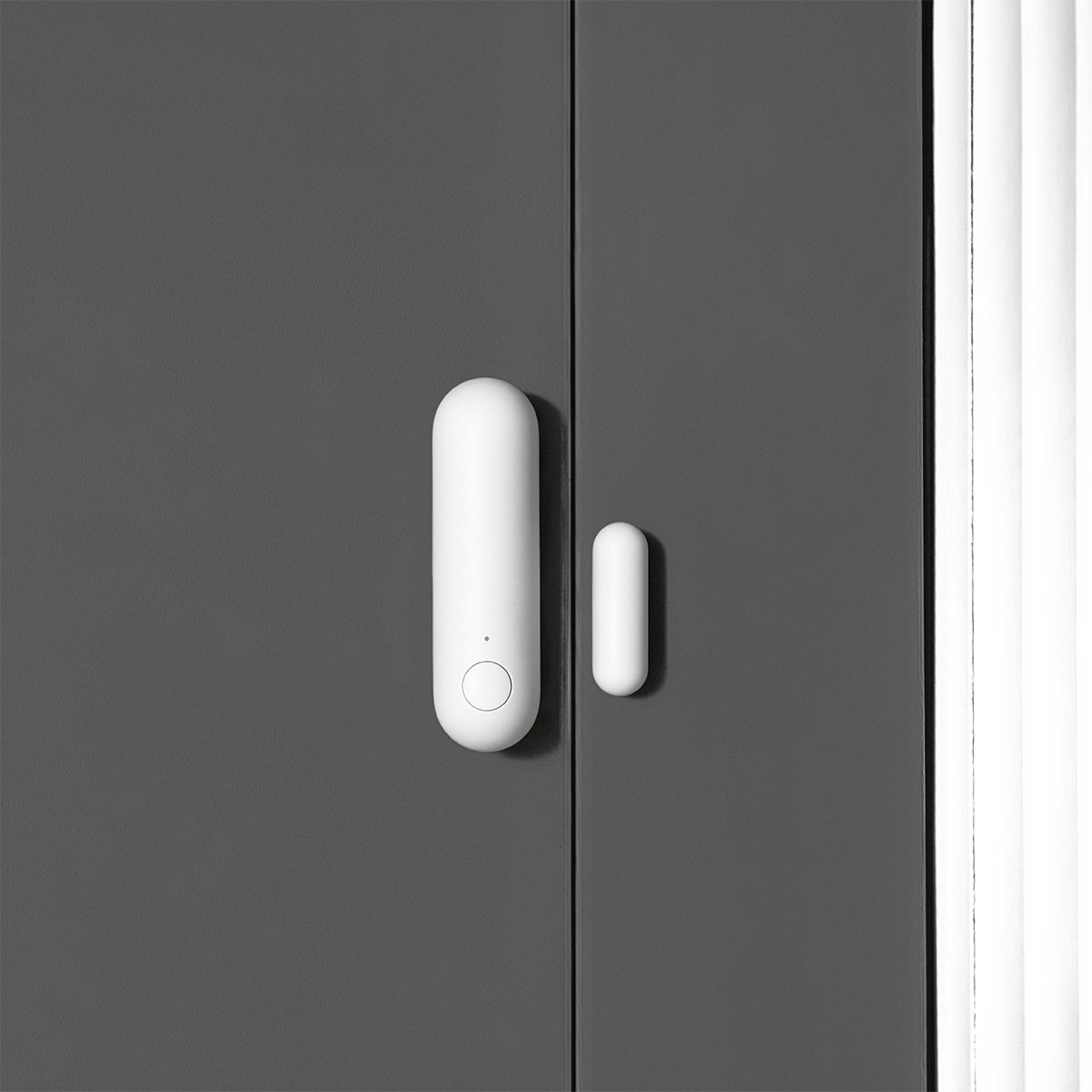
- What it won’t touch: smart plugs, sensors, hubs, IR blasters, Wi-Fi adapters, robot vacuums, smart locks and video doorbells. None of them is in the 12 categories. And because redemption happens at participating retailers, the cheap parallel-import marketplace listings are out.
In short, the vouchers pay for the appliance and you pay for the brains. The smart part of the plan is picking appliances that make the brains cheap or unnecessary.
The best smart buy on the list: a DC ceiling fan
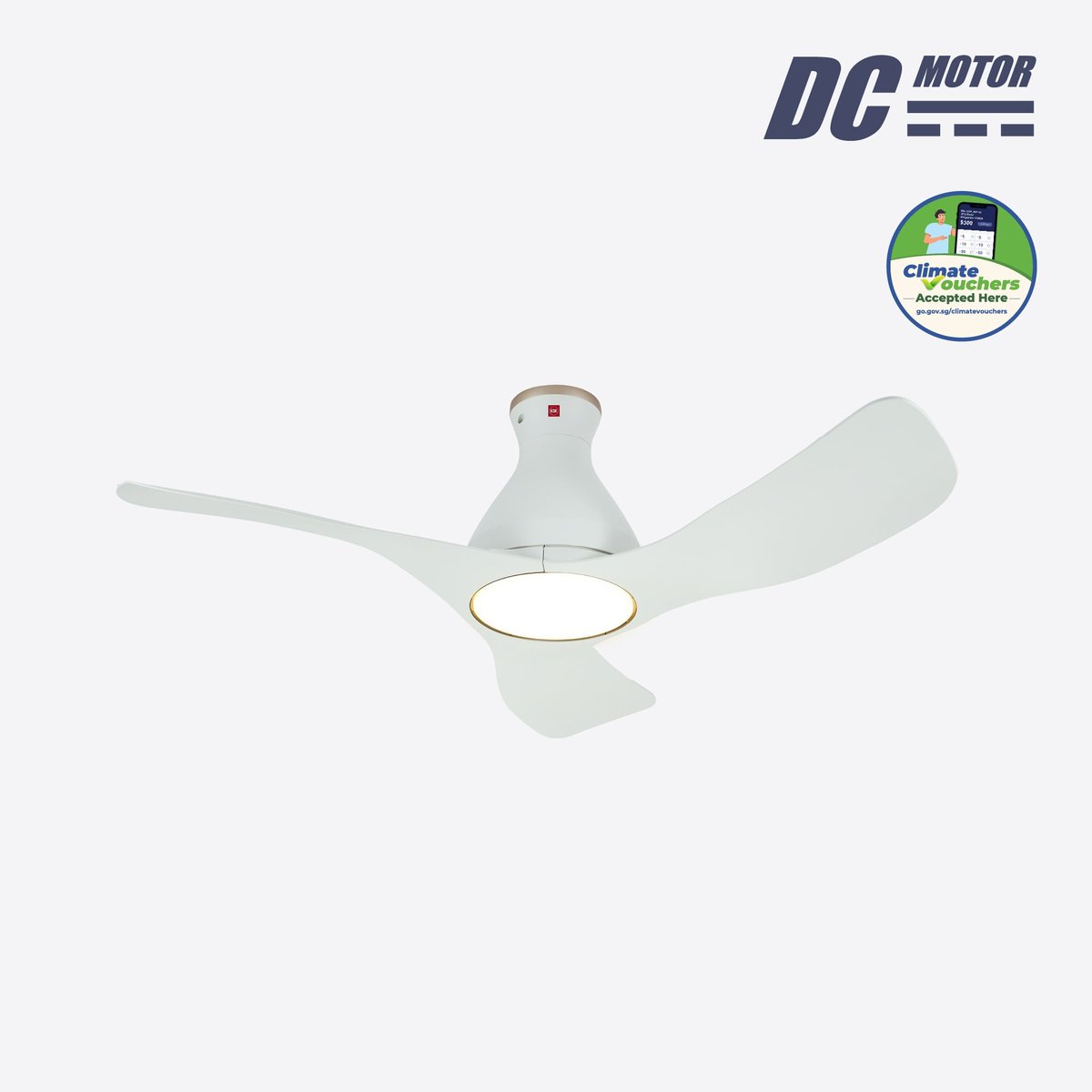
This is where the vouchers and smart home buying overlap most neatly. The DC fan rules are short. Ceiling, stand and table fans with DC motors all qualify, and they don’t need an energy label because fans don’t carry one. The one exclusion is DC fans with non-LED lights. Almost every Wi-Fi ceiling fan sold in Singapore is a DC fan with an LED light kit, so almost all of them are fine.
Three examples:
- KDK E48GP. A 48-inch, three-blade DC fan with a dimmable, colour-adjustable LED, 10 speeds, KDK’s 1/f Yuragi breeze mode and Wi-Fi app control. It’s S$458 on KDK’s own store against a S$578 list price, and the product listing itself is tagged as Climate Voucher-eligible up to S$400 (KDK E48GP). It’s on pre-order there right now, shipping from 31 October. Spend the full S$400 on it and you pay S$58, plus installation, which KDK lists from S$45 for a basic job.
- Crestar Airis+, Altis+ and Hiro. Crestar’s Wi-Fi ceiling fan range runs from about S$359 to S$632 and advertises Google Assistant and Alexa control. The Altis+ is a hugger design, which suits a 2.6m HDB bedroom ceiling. Check that the box says DC before you hand over the QR code.
- Fanco Rito 5. A five-blade DC hugger with a 24W tri-colour LED kit and six speeds. The Wi-Fi control is an optional module on the Smart Life (Tuya) app. The fan is clearly voucher territory. The add-on module isn’t a fan, so ask the shop how they’ll bill it.
Now the caveat we keep repeating. As we covered in our smart ceiling fan guide, none of the mainstream Singapore fan brands supports Matter or Apple Home natively. You get the brand’s app, plus Google Home and Alexa. If you’re on Apple Home, you’ll need Home Assistant or Homebridge to bridge the fan in. That isn’t a reason to skip the fan. It just means you should expect the app and voice control to be the main event.
What a DC fan actually saves
Here’s rough maths, with the assumptions spelled out. An older AC ceiling fan at a medium speed might draw around 70W, and a modern DC fan around 30W at a similar airflow. That 40W gap, over 10 hours a day, comes to about 146kWh a year. At 31.16 cents a kWh, that’s roughly S$45 a year per fan, more if the fan runs all night as well.
That won’t change your life. The larger saving is indirect: a fan you can automate lets you run the aircon a degree or two warmer and still sleep comfortably, and the aircon is where the real money goes.
Stand fans count too
The DC rule covers stand and table fans, so a smart DC pedestal fan like the Xiaomi Mi Smart Standing Fan 2 (DC motor, 100 speed steps in the app, around S$85–99) qualifies in principle. The catch is where you buy it. Plenty of smart stand fans in Singapore are bought from marketplace stores that don’t take vouchers. If one of the participating chains stocks the model you want, great. If not, don’t buy a worse fan just to use the voucher. Our smart stand fan guide has the wider shortlist.
Purifier-fans like Dyson’s are a grey area. They use brushless DC motors, but they’re sold as air purifiers. Ask the retailer before you assume.
Aircon: the voucher pays for the ticks, not the Wi-Fi
An aircon has to carry 5 ticks to qualify. If your 10-year-old system is due for replacement anyway, putting S$400 against a 5-tick inverter system is the single largest efficiency gain on the list. It’s not a smart home purchase, though, and the smart part usually costs extra.
Most 5-tick systems sold here need an add-on module to get on Wi-Fi. Daikin’s adapter is around S$150 per indoor unit, and Daikin Singapore says it has to be fitted by the retailer or an installer. A three-fan-coil HDB system means three adapters. Adapters aren’t one of the 12 categories, so plan to pay for them in cash.
There’s a cheaper route. An IR blaster such as the SwitchBot Hub 2 (around S$89) or the Aqara Hub M3 (around S$190) can run the aircon, the TV and the ceiling fan, and it puts the aircon into Matter, which the manufacturer adapters don’t. The trade-off is that infrared is one-way: the blaster remembers what it sent rather than reading what the unit is actually doing. We went through both routes in detail in Wi-Fi adapter vs IR blaster. If you’d rather have someone else set it up, HomeSmart offers smart aircon control as a package.
Whichever route you choose, add a temperature sensor so your automations act on the actual room temperature. The Aqara Climate Sensor W100 costs S$79. It has a 3.4-inch display and ±0.2°C accuracy, and it runs on either Thread or Zigbee. One caveat: Aqara’s HVAC control with an IR aircon works only in Zigbee mode, paired with a Hub M3. In Thread mode it’s a plain Matter sensor. Either way, an automation like “if the bedroom is under 25°C at 3am, switch the aircon off and the fan on” is where the savings come from.
LED lights: the smart bulb trap
This is the category people get wrong. The LED lights rules say:
- Eligible lamps need 2, 3 or 4 ticks on the refreshed energy label, which uses a 4-tick scale.
- Lamps with the old round energy label aren’t eligible.
- Since 1 April 2025, every lamp sold in Singapore has had to carry the refreshed label (NEA’s advisory explains the scheme).
- Some LED lights without labels are eligible too: downlights, spotlights and circular tubelights.
Smart bulbs are lamps, so an officially distributed smart bulb should have a tick rating on the box. The rating isn’t guaranteed to be 2 or more, though. Tunable white and colour bulbs give up some efficiency for their extra LEDs and radio, so check the label rather than assuming. If a smart bulb has no Singapore energy label at all, it’s probably a grey import, and you couldn’t use the voucher on it anyway.
Two practical points. A bulb only saves energy compared with whatever it replaces, and since 2023 every bulb sold in Singapore has had to meet LED-level efficiency, so most of us are already swapping one LED for another. The saving comes from automation: lights that switch off when a room empties or dim at night. Our Matter smart bulb guide covers which bulbs do that well.
If you’re renovating, unlabelled LED downlights are explicitly allowed. That makes the vouchers a reasonable way to offset part of a smart downlight install, provided your contractor or retailer is on the participating list.
The categories with a smart side
A few of the other categories have a smart angle worth knowing about:
- Water heaters (5 ticks). A 5-tick storage heater plus a smart 20A switch on a schedule is a sensible pairing. The voucher covers the heater, not the switch.
- Fridges and washing machines. Many 3-tick fridges and 4-tick washers now come with Wi-Fi apps. In an HDB flat, the app rarely matters much. Buy on ticks, capacity and noise, and treat the app as a bonus.
- Induction stoves. No smart features worth paying for, but some newer hobs pair with matching cooker hoods. That’s a convenience feature, not a saving.
Two ways to spend S$400 in a 4-room HDB
Plan A: the fan-first flat (about S$58 out of pocket, plus installation). Put all S$400 towards a KDK E48GP or a similarly priced Crestar for the living room. Use the fan app’s schedule, or link it to Google Home, and let it carry the evening so the aircon goes on later. If you want more later, add an IR blaster for the bedroom aircon with your own money.
Plan B: the aircon replacement. If your system aircon is on its last legs, put the vouchers against a 5-tick replacement. Then spend about S$89 of your own on a SwitchBot Hub 2, or S$79 on a W100 sensor if you’re already on an Aqara Hub M3, to automate it. The aircon saves money every day it runs. The automation is what stops it running when no one’s home.
Splitting the vouchers works too. You can spend different amounts in different shops, so a DC bedroom fan in one shop and labelled LED downlights at another is fine. Just make sure every shop is on the participating list before you go.
The bottom line
The Climate Vouchers aren’t a smart home subsidy, but they line up with one better than most people realise. The best use for most HDB flats is a Wi-Fi DC ceiling fan: it qualifies, it’s already smart, and the voucher covers most of the price. For aircons, the voucher pays for the 5 ticks and you pay for the Wi-Fi. With LED lights, read the label before you assume a smart bulb qualifies.
You have until the end of 2027. Even so, a voucher that sits in your SMS inbox is just S$400 that expires. Pick the appliance you’d replace anyway, make sure it’s one you can automate, and spend the voucher on that.