There’s a particular kind of magic to walking from your kitchen to your bedroom and having the same song follow you, perfectly in sync, without dropping a beat. For years, multi-room audio in Singapore meant one of two things: a five-figure custom install wired into your renovation, or a tangle of Bluetooth speakers that drifted out of sync the moment you stepped into the next room.
In 2026, that’s finally a solved problem — and it no longer requires you to remortgage the flat. Three ecosystems now dominate the conversation: the established king Sonos, the fast-rising value disruptor WiiM, and Apple’s HomePod for the iPhone faithful. Here’s how they actually stack up for a Singapore HDB or condo, with real SGD pricing and the trade-offs nobody puts on the box.
Why Whole-Home Audio Finally Works in an HDB
The thing that killed multi-room audio in the past was sync. Bluetooth speakers each pull their own stream, and even a few milliseconds of drift between the living room and the kitchen turns a song into an echo chamber. The modern systems below all solve this the same way: every speaker joins your home Wi-Fi network and pulls from a single synchronised clock. Play a track “everywhere” and it lands on every speaker within the same fraction of a second.
For a typical HDB four-room or a compact condo, this is genuinely transformational. You’re not wiring anything. You’re not drilling into RC walls. You buy one speaker, set it up in ten minutes, and add more whenever the budget allows. The catch — and there’s always a catch in Singapore — is that your Wi-Fi has to be solid through concrete walls, which we’ll come back to.
You’re Not Buying a Speaker. You’re Buying an Ecosystem.
This is the single most important thing to understand before you spend a cent. A multi-room speaker is only as good as the app and ecosystem behind it, and switching later means selling everything and starting over. The hardware is almost the easy part.
So the real decision isn’t “which speaker sounds best” — it’s “which ecosystem do I want to live in for the next five to seven years.” Pick the platform first, then the speakers.
Sonos: Still the Benchmark
Sonos remains the system to beat, and it earns that position the boring way: it just works. The app lets you group and ungroup rooms with a tap, the speakers stay in sync, and Sonos has supported its hardware for well over a decade. It’s also the most ecosystem-agnostic option here — it plays nicely with AirPlay 2 for iPhone users, has its own voice control, and works with Amazon Alexa.
The Sonos Range, Priced for Singapore
The local lineup at trysonos.sg is straightforward:
- Era 100 — S$449. The bookshelf workhorse. Stereo sound from a single compact unit, far-field mics for voice control, and the right speaker for most HDB bedrooms and kitchens. Buy two and pair them for proper stereo separation.
- Era 100 SL — around S$349. Launched in early 2026, this is the Era 100 with the microphones stripped out. If you find always-on mics unsettling — a fair concern in a bedroom — this is the cheapest legitimate way into the Sonos ecosystem.
- Era 300 — S$799. Six drivers firing in multiple directions for Dolby Atmos spatial audio. Overkill for background music, genuinely special for a serious living-room listening setup.
- Roam 2 and the new Sonos Play. The portable Roam 2 is the cheapest entry point and doubles as a Bluetooth speaker for the balcony. The Sonos Play, new for 2026, slots between the Roam 2 and the larger Move 2 as a mid-size Wi-Fi-and-Bluetooth hybrid.
A practical Singapore starter setup — one Era 100 in the living room and one in the master bedroom — runs about S$900. Add as you go.
Where Sonos Stumbles
Two honest warnings. First, Sonos is the most expensive option here by a clear margin. Second, the company has earned a measure of customer scepticism after a badly handled app overhaul a couple of years ago left long-time owners furious. The app has since stabilised, but it’s worth knowing the history before you commit four figures. If reliability and resale value matter most to you, Sonos still wins. You’re just paying a premium for the privilege.
WiiM Sound: The Disruptor That Undercuts Everyone
Here’s the most interesting story in audio right now. WiiM built its reputation on excellent, cheap streaming adapters — little boxes that made existing hi-fi systems smart. In early 2026 it released its first proper speaker, the WiiM Sound, and it has rattled the entire category.
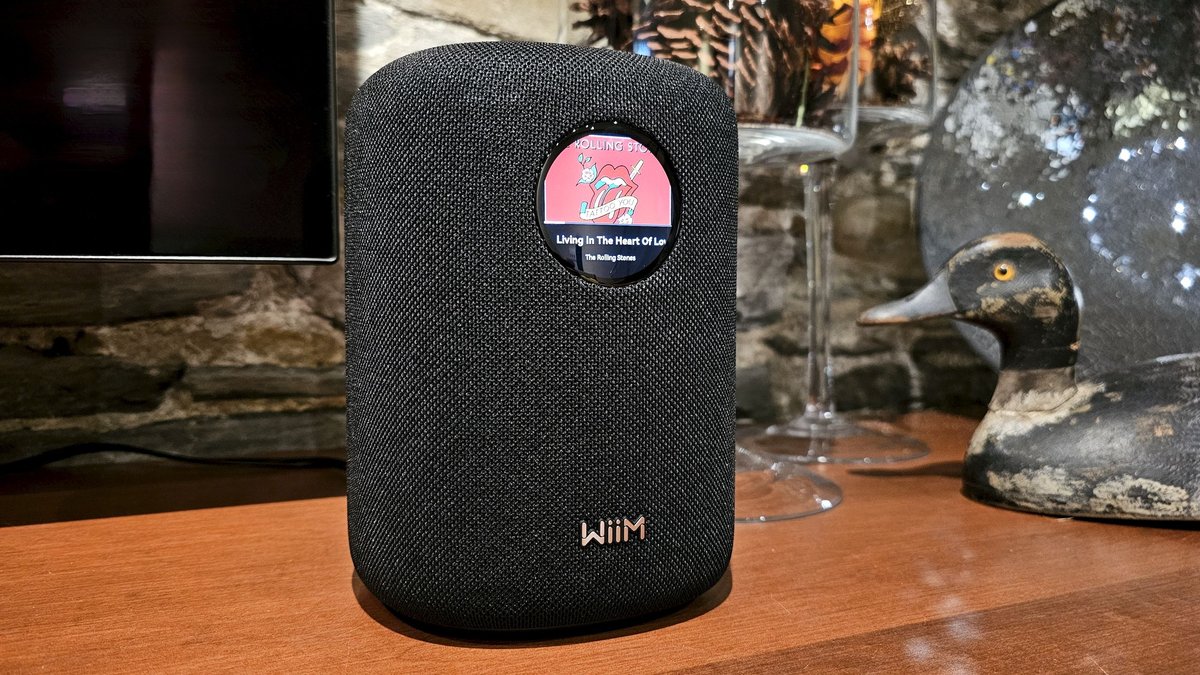
At US$299 officially — Singapore listings on Lazada and through authorised dealer Sam Audio SG hover around the S$390–430 mark — it directly targets the Sonos Era 100 and Apple’s HomePod. For the money you get a custom 4-inch long-throw woofer, dual 1-inch silk-dome tweeters, 100 watts of amplification, and a genuinely charming 1.8-inch colour touchscreen on the front. There’s also a cheaper WiiM Sound Lite at US$229 that drops the touchscreen but keeps the audio hardware.
The reviews have been broadly positive. What Hi-Fi? called it a HomePod-rivalling design with ample streaming features, while noting its easygoing sound can’t quite topple the absolute class leaders. That’s a fair summary: at this price, it’s an outstanding value, not a giant-killer.
Two caveats matter for Singapore buyers. The WiiM Sound has no hands-free voice assistant — no built-in Alexa or Siri waiting for a wake word — and no Apple AirPlay. It streams over Bluetooth and Google Cast, and supports Spotify, Tidal and Qobuz directly through the well-regarded WiiM Home app. If you’re an Android household that wants great sound without Sonos pricing, WiiM is the smart-money pick. If your home runs on iPhones and you lean on AirPlay or Siri, the missing pieces will frustrate you.
Apple HomePod: The Obvious Pick — If You’re All-In on Apple
If every adult in your flat carries an iPhone, the maths gets simple. The HomePod lineup is the most frictionless multi-room audio you can buy in Singapore, provided you never want to leave Apple’s walled garden.
- HomePod mini — S$139. Astonishing value for what it is. The sound is bigger than the puck-sized body suggests, and at this price you can scatter them through the flat — one per bedroom — without flinching.
- HomePod (2nd generation) — S$429. The full-size unit. Room-sensing spatial audio, properly weighty bass, and it pulls double duty as a Thread border router and Matter smart-home hub, which is a real bonus if you’re also building out smart lighting or sensors.
Setup is the HomePod’s superpower: hold an iPhone near a new unit and it configures itself. AirPlay 2 streams anything from your phone or Mac to any speaker or group, and asking Siri to play music across the home just works. The fundamental limitation is equally clear — without an iPhone in the house, a HomePod is close to useless. There’s no Android app worth the name. It is the ultimate ecosystem-lock-in purchase. If you’re already deep into Apple Home, our guide to building an Apple-based smart home is a useful companion read.
What About Google and Amazon?
The honest answer in 2026: tread carefully. Amazon’s Echo line still does cheap, cheerful multi-room audio, but it’s tuned more for Alexa convenience than for music quality. Google’s situation is messier — the Nest Audio has been hard to find in stores for some time, and Google is transitioning to a new Gemini-powered Google Home Speaker expected to land around US$100. Until that ships and proves itself, we’d hold off building a serious music system on Google hardware. For a fuller breakdown of how the assistant platforms compare, see our SmartThings vs. Google Home vs. Apple Home showdown.
Matching the System to Your Home
Cutting through it all, here’s how we’d advise three common Singapore households:
- The all-Android, value-focused home. WiiM Sound, every time. You get 90% of the Sonos experience for meaningfully less, and you don’t pay the Apple tax. Just be at peace with reaching for your phone instead of barking at a speaker.
- The all-iPhone home. HomePod. The setup is effortless, the multi-room sync is rock-solid, and the HomePod mini’s S$139 price makes blanketing the flat genuinely affordable. The 2nd-gen unit doubling as a Matter hub is a quiet bonus.
- The mixed-device home that wants the best, full stop. Sonos. It’s the only system here that treats iPhone and Android users as equal citizens, and its long-term support and resale value justify the premium. Start with a pair of Era 100s and expand.
Singapore Buying Notes
A few local realities before you check out:
Wi-Fi is the foundation. Every system here lives or dies on your home network. HDB and condo concrete walls are brutal to Wi-Fi, and a speaker in the back bedroom that keeps dropping off the network will ruin the experience. If your router is more than a few years old, sort that out first — our Wi-Fi 7 router guide is the place to start. A mesh system is close to mandatory for anything bigger than a three-room flat.
Buy from authorised channels. Sonos sells direct through trysonos.sg and via retailers like TC Acoustic and Gain City. Apple’s pricing is identical across apple.com/sg and resellers. For WiiM, stick to recognised dealers so your warranty is honoured locally. Grey-market imports can save a few dollars and cost you far more if something fails.
Plan for power blips. Multi-room speakers re-sync quickly after a power interruption, but if you’ve built a wider smart home around them, a small UPS keeps the network and hub online through the brief outages that hit some estates — see our UPS battery backup guide for the details.
The Verdict
Multi-room audio has quietly become one of the best-value upgrades you can make to a Singapore home. There’s no wrong answer among these three — only the right answer for your particular household.
Pick WiiM Sound if you want the most music for your money and live on Android. Pick Apple HomePod if your home is already an Apple household and you value setup that’s effortless to the point of feeling like cheating. Pick Sonos if you want the most polished, device-agnostic, future-proof system and you’re willing to pay for it. Decide on the ecosystem, buy one speaker, and let the music follow you home.
For more smart home reviews with a global lens, our sister site Smartifiers covers the same gear from an international angle.