Deepavali falls on Sunday, 8 November this year, with Monday 9 November as the public holiday. Christmas follows seven weeks later, and Chinese New Year comes after that. In a lot of Singapore homes the fairy lights go up in early November and stay up until the oranges are gone. That’s a long time to be running a string of LEDs, often on a corridor-facing window or a condo balcony, often plugged into an adaptor nobody has looked at since last year.
It’s also the season smart-light brands push hardest. Philips Hue has the Festavia range. Twinkly has made app-controlled tree lights for years. Govee and Nanoleaf both sell Matter-compatible string lights. They do look great: pick any colour, run animated effects, set a schedule, say “turn on the lights” to your HomePod.
Before you add one to cart, though, there’s a Singapore-specific check that matters more than which smart home platform it supports. It’s the SAFETY Mark, and plenty of the smart lights you’ll find online don’t have it.
The Rule Most Smart-Light Listings Skip
Singapore regulates 33 categories of household electrical products under the Consumer Protection (Safety Requirements) Regulations. Enterprise Singapore’s list of controlled goods includes decorative lighting chains (tested to IEC 60598-2-20) and rope lights as a separate entry. It also covers AC adaptors, the power bricks that feed most smart string lights. Before a supplier can sell a controlled product here, it has to be registered and carry the SAFETY Mark.
The regulations bind sellers, not you. Nobody is going to fine you for hanging a string of lights you imported yourself. But the mark is the only evidence that someone has tested that particular model to the relevant standard. The Consumer Product Safety Office’s own decorative lighting tips open with exactly this: check for the SAFETY Mark before you buy.
This is where smart lights get awkward. Hue, Govee, Nanoleaf and Twinkly are global brands, but their festive ranges are mostly built and priced for the US, UK and EU holiday markets. Outside Twinkly, which has had a local distributor, we couldn’t find official Singapore pricing for any of the string lights below. What turns up locally is mostly third-party marketplace listings and “imported from the US/UK” resellers. A unit shipped in from America typically arrives with a US two-pin plug and a power supply that has never been through Singapore registration.
So the first question isn’t “Matter or not?” It’s “who is selling this to me in Singapore, and does the box (or the power supply) carry the mark?” If you’re buying from a grey importer, read our guide to what breaks when you buy smart home gear from overseas. Most of those warnings apply to Christmas lights as well.
With that out of the way, here’s how the main options compare.
Philips Hue Festavia: The Best Lights, If You’re Already in Hue
Festavia is Hue’s string-light range, and it’s the one to beat on colour quality. The second-generation 20m string has 250 individually controlled LEDs and is weatherproof, so you can use it indoors or out. T3’s Festavia 2nd gen review called it the upgrade the first version needed, and listed it at £199.99 in the UK (€219.99 in Europe). Hue has kept expanding the range. The Globe and Permanent versions arrived in 2025, and Hueblog reported that 250-LED curtain, icicle and net versions were due this autumn.
Protocols: Festavia is a Hue light, which means Zigbee. It works best through a Hue Bridge, and the bridge is what exposes it to Matter, Apple Home, Google Home and SmartThings. If you already own a bridge, Festavia slots straight into your existing scenes and automations. Google Home now controls Hue lights locally over Matter, so that route no longer depends on the cloud either.
The catch: Hue’s Singapore support site lists Festavia, but we couldn’t find an official local price. The UK figure works out to well over S$300 before shipping. If you don’t own a bridge, add that too. The Hue Bridge Pro quietly went from US$99 to US$139 in the US this year. For a seasonal decoration that’s a lot of money. Festavia makes sense if you’re a committed Hue household who’ll use it every Deepavali, Christmas and CNY. It’s poor value as your first smart light.
Twinkly: The Clever Effects, Without Matter
Twinkly’s party trick is mapping. You point your phone’s camera at the lights, the app works out where each LED physically sits on your tree or window, and then it can draw shapes and gradients across the actual layout. It’s still the feature to beat.
Protocols: Twinkly connects over Wi-Fi and Bluetooth and works with Google Home and Alexa. For Apple users, Twinkly’s HomeKit support came through a firmware update for its Generation II and Plus devices. We couldn’t confirm Matter support, so don’t buy it expecting Matter.
Singapore availability: Twinkly is the one brand here with a local presence. An Expat Living Singapore Christmas feature named Burns+Myers as its exclusive Singapore distributor. Prices on local third-party listings are steep, around S$127 to S$158 for the 200-LED USB-C shaped strings (stars, hearts). The standard Strings are rated IP44, which is fine for a sheltered balcony and not for anything directly in the rain. The USB-C models run off a phone charger. If you go that way, use a charger that carries the SAFETY Mark, not a spare from a drawer.
Govee Christmas String Lights 2: The Value Pick on Paper
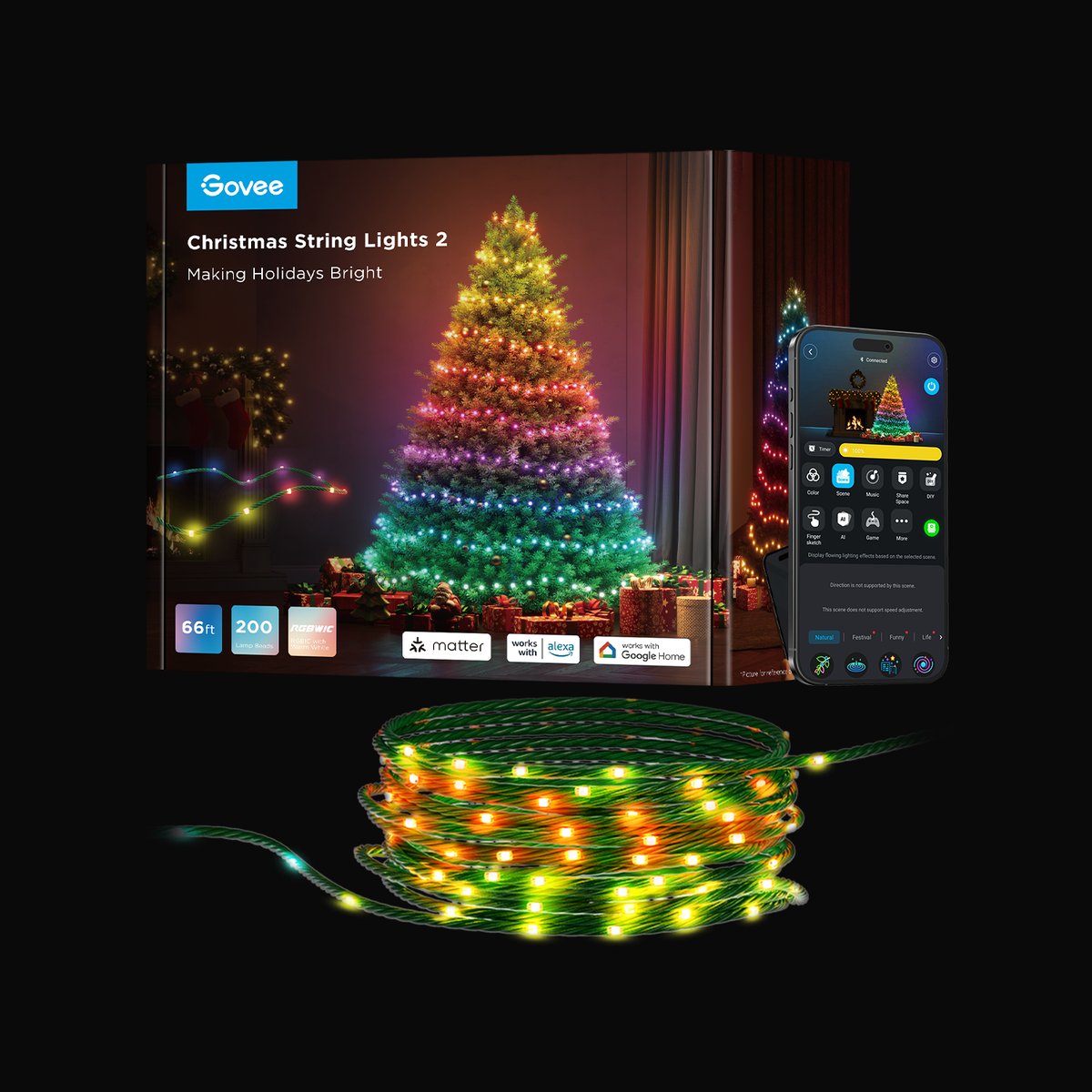
Govee’s Christmas String Lights 2 come in 66ft, 99ft, 164ft and 328ft lengths (models H70C4, H70C5, H70C7 and H70C9). They connect over Wi-Fi and Bluetooth and are Matter-compatible. The lights themselves are rated IP65, the best weather rating in this round-up, and Govee lists them at US$99.99, recently discounted to US$74.99 on its US store.
Read the fine print on the power supply, though. Govee’s own FAQ says the adaptor on the 66ft to 197ft models is rated only IP44 and is meant for dry locations. Outdoors, it needs a waterproof box. In Singapore that matters more than the IP65 headline. November brings inter-monsoon afternoon thunderstorms, and the Northeast Monsoon arrives in December. Rain-proof lights plugged into a splash-proof brick on a wet corridor ledge is not a waterproof setup.
Protocols: Because it’s Matter over Wi-Fi, you’ll need a Matter controller such as a HomePod mini, Apple TV, Nest Hub or SmartThings hub. Once paired, it gets local control without Govee’s cloud. You keep Govee’s app for the fancy effects. Matter only exposes the basics: on/off, brightness and colour.
The catch: It’s the same story as Festavia. These are US-market units, and we found no official Singapore channel. A US import will need a plug adaptor, and its power supply won’t carry the SAFETY Mark.
Nanoleaf Matter Smart Holiday String Lights: The Simplest Matter Option
Nanoleaf’s Matter Smart Holiday String Lights pack 250 addressable LEDs across two 10m runs (20m in total), with whites from 2700K to 6500K. They connect over Wi-Fi, Bluetooth or Matter over Wi-Fi, are rated IP44, and have sold from US$99.
Protocols: Of the four branded options, this was designed around Matter from day one. Pair it straight into Apple Home, Google Home, SmartThings or Home Assistant without creating a vendor account first.
The catch: We couldn’t find these officially sold in Singapore either. IP44 means splash-resistant, so keep them under a shelter.
The Option Nobody Markets: Ordinary Lights and a S$20 Matter Plug
Here’s our honest recommendation for most HDB and condo households. Buy a SAFETY-Marked set of fairy lights from a local shop. Then make them smart with a Matter smart plug.
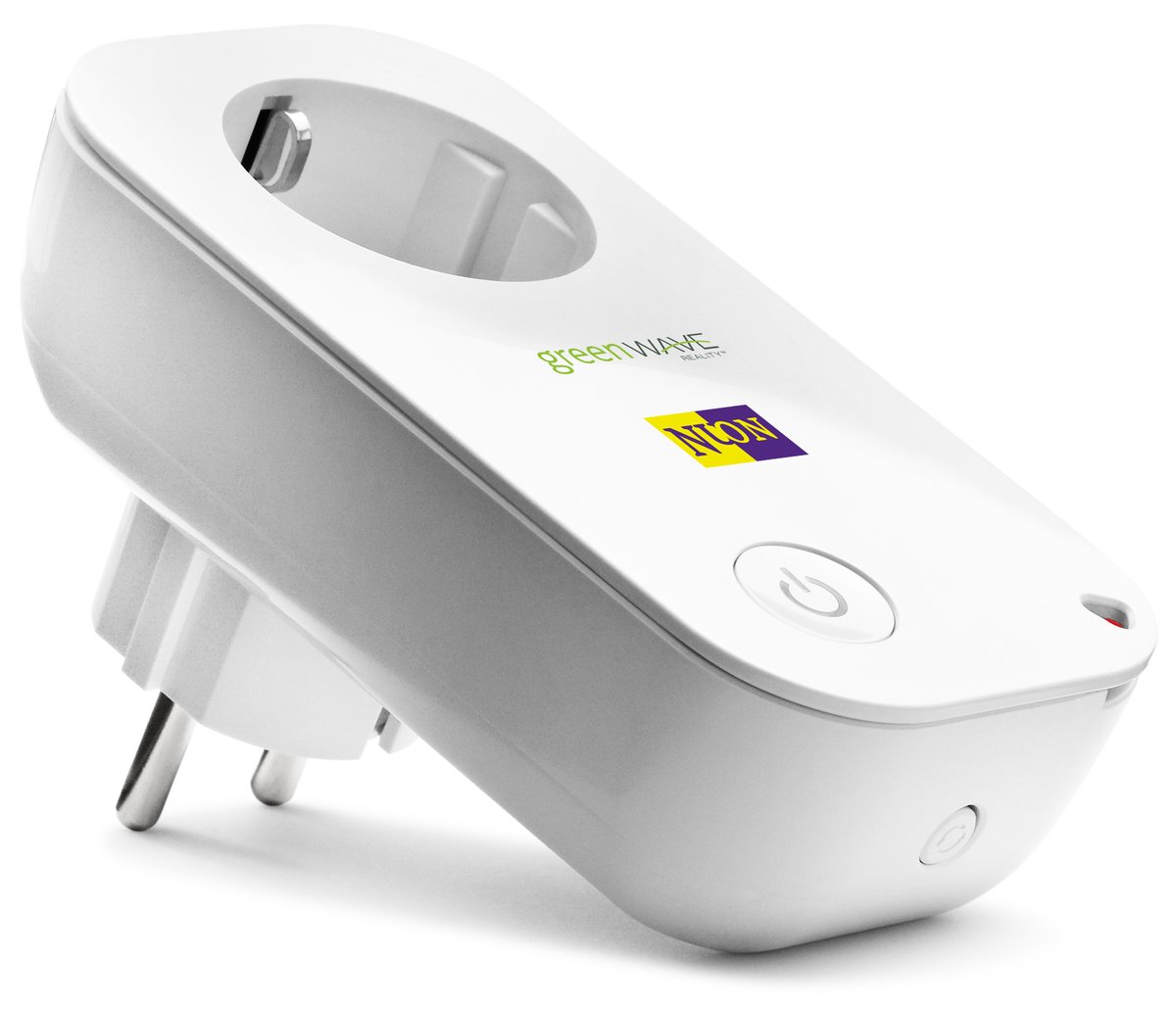
The TP-Link Tapo P110M is a good example. It’s Matter-certified, has energy monitoring, takes Singapore’s three-pin Type G plug, and sells locally for S$19.90 (Challenger had it on sale for S$13.90 at the time of writing). If you’d rather buy from someone who’ll set it up for you, HomeSmart’s Wi-Fi smart plug does the same job. We compared more options in our smart plugs with energy monitoring guide.
You give up per-LED colour effects. In return, you get:
- A compliant, locally supported light set. If it fails in week two, you take it back to the shop instead of arguing with an overseas seller.
- Schedules and voice control in Apple Home, Google Home, SmartThings or Home Assistant.
- Proof of what it draws. A typical LED string uses a few watts to about 15W. Run one six hours a night for two months and you’ll spend about S$2 or less on electricity. The plug’s energy readout will show you if something is drawing far more than it should.
- Reuse. In January, the plug goes back to running a fan or the water dispenser.
One caveat: smart plugs like the P110M are indoor devices. Plug it in inside the flat and run the light string out, not the other way round.
The Automations Worth Setting Up
The best reason to make festive lights smart isn’t rainbow effects. It’s that the same CPSO safety page asks you to switch decorative lights off when you go to bed or leave home, because “leaving lighting chains unattended for long periods of time could potentially result in short circuits and fires”. Nobody remembers to do that every night for three months. A schedule does.
Whichever lights you pick, set up three automations:
- On at dusk, off at a fixed bedtime. For example, 7pm on and 11:30pm off, every night. Apple Home, Google Home and SmartThings can all trigger on sunset.
- Off when everyone leaves. Use your phone’s location, or a door sensor and your lock if you have them. For a balcony or corridor window, “nobody home” should mean “lights off”.
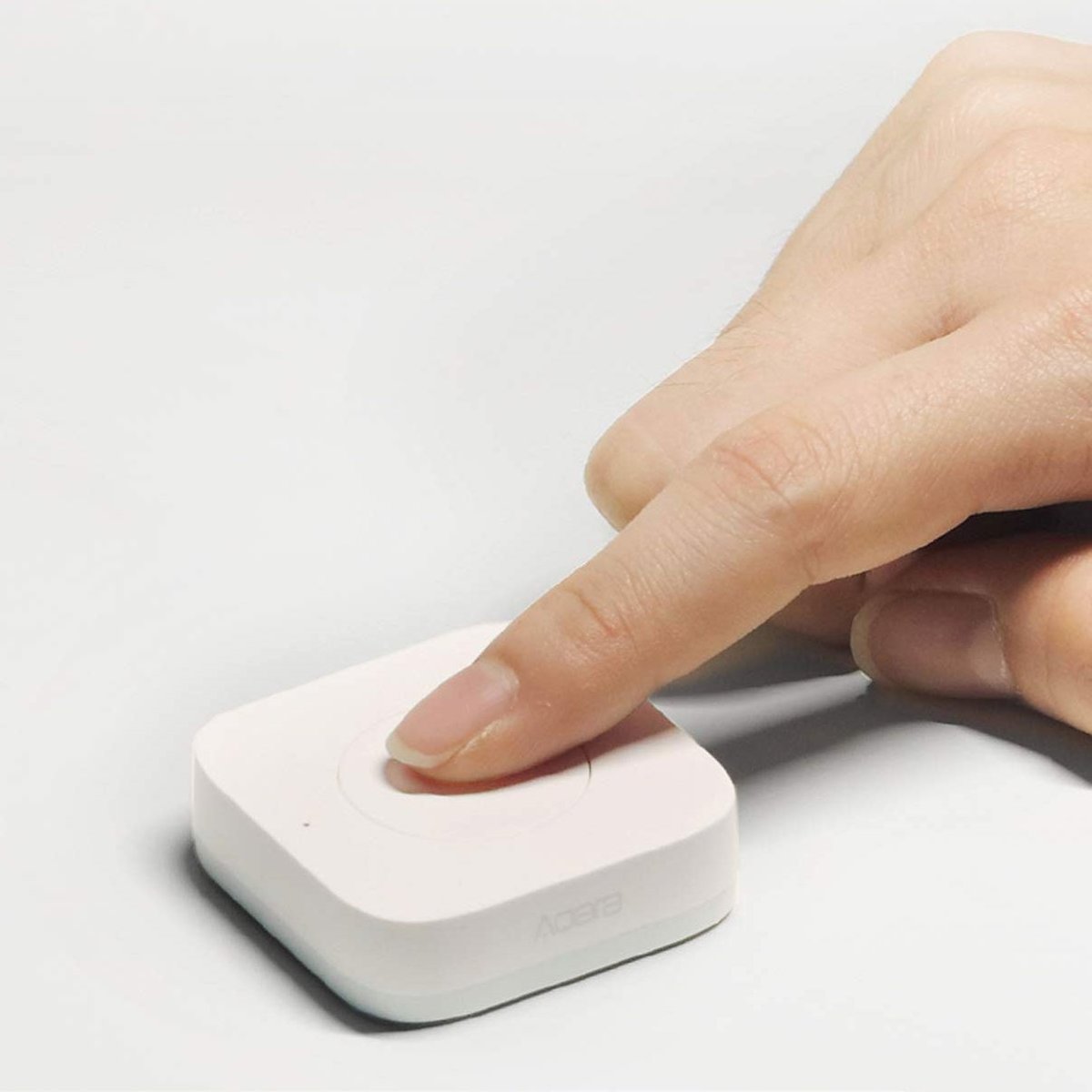
- A physical button. Guests and helpers shouldn’t need your app. A wireless button such as the Aqara Wireless Mini Switch on an Aqara Hub M3, which also works as a Matter controller, gives anyone a simple on/off.
If you already use window sensors and rain alerts from our lightning-season guide, add the lights to that automation. A heavy-rain warning that also switches off the balcony string is a sensible combination for November.
HDB and Condo Practicalities
- Keep the corridor clear. A cable run from your window to the gate is a trip hazard for neighbours and gets in the way of anyone needing to get past in an emergency. Keep wiring on your side of the window or gate, and fully unwind extension leads. CPSO warns that coiled extensions overheat.
- Never run indoor lights outdoors. CPSO’s guidance is blunt: indoor lighting’s wire insulation “may not be able to withstand wet or windy weather”. On a corridor-facing window, outdoor-rated lights and an indoor plug are the safe pairing.
- Condo balconies have by-laws. Some MCSTs restrict what can hang on the façade. Check before you drape a 30m net over the railing.
- Wi-Fi lights and mesh routers don’t always get along. Govee, Nanoleaf and Twinkly all pair over Wi-Fi. If pairing fails on a mesh system that merges bands into one network name, our guide to giving your smart home its own Wi-Fi explains the fix. It’s also a better place for cheap seasonal gadgets than your main network.
So, Which Should You Buy?
| Best for | Protocols | Weather rating | Singapore reality | |
|---|---|---|---|---|
| Hue Festavia (2nd gen) | Committed Hue homes | Zigbee via Hue Bridge; Matter through the bridge | Weatherproof, indoor/outdoor | Supported locally, no official SG price found |
| Twinkly Strings | Mapped tree effects | Wi-Fi, Bluetooth; HomeKit (Gen II/Plus); Google, Alexa | IP44 | Local distributor; ~S$127–158 on local listings |
| Govee Christmas String Lights 2 | Big outdoor runs on a budget | Wi-Fi, Bluetooth, Matter | Lights IP65, adaptor IP44 | US import; no SAFETY Mark on imported units |
| Nanoleaf Matter Holiday | Matter-first simplicity | Wi-Fi, Bluetooth, Matter over Wi-Fi | IP44 | Import only, as far as we could find |
| Local lights + Tapo P110M | Most HDBs and condos | Wi-Fi, Matter | Plug indoor only | Locally sold and SAFETY-Marked lights, ~S$14–20 for the plug |
If you’re a Hue household that decorates for Deepavali, Christmas and CNY, Festavia is worth the money and fits into what you already run. If your tree is the centrepiece and you want animated patterns that follow its shape, Twinkly’s mapping is the one to beat and it has a local distributor, but don’t expect Matter. Govee and Nanoleaf look like good value at US prices, but once you add shipping, a plug adaptor and the lack of a SAFETY Mark, the case gets much weaker for a Singapore flat.
For everyone else, buy SAFETY-Marked lights locally, plug them into a Matter smart plug, and set the bedtime schedule. It costs less and you have someone local to go back to if it fails. It also covers the part of festive lighting that actually matters, which is the lights being off while you’re asleep or out.